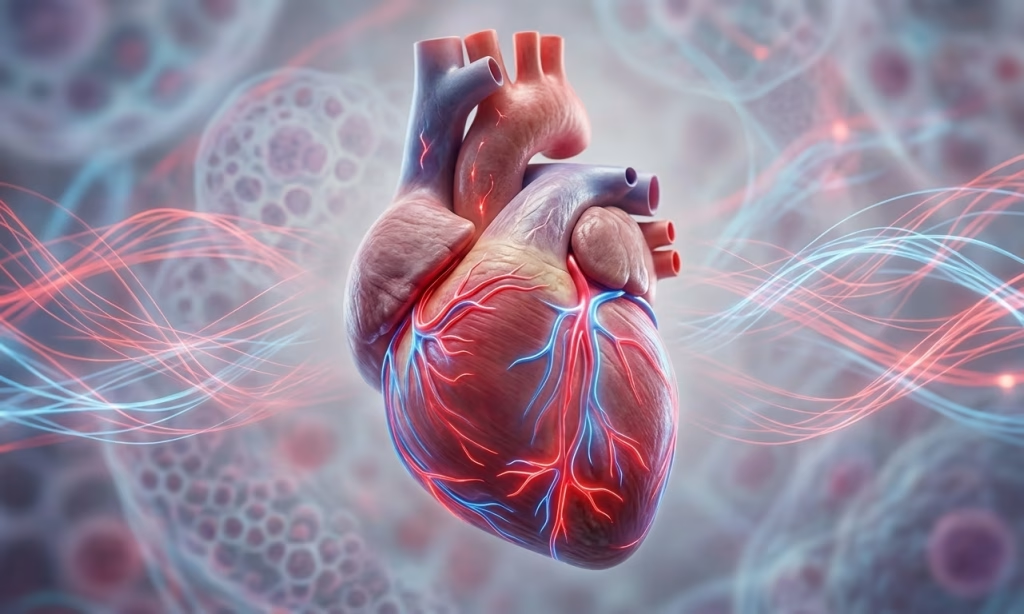
A new study suggests that transplanted hearts can change their biological age in response to the body of their new recipients.
What You Need to Know
- Transplanted hearts don’t have a fixed age: A Harvard study suggests that organs can rejuvenate or age depending on the recipient’s body — older donor hearts showed signs of rejuvenation in young patients.
- Molecular markers change with the environment: By analyzing DNA methylation across more than 320,000 regions, scientists observed that the heart’s biological age aligned more closely with the recipient’s age than the donor’s.
- Could expand the use of older donor organs: If confirmed, the finding could lead to a reassessment of transplant criteria and help reduce waitlists — though the study is still a preprint and requires further research.
A recent study from Harvard University and Brigham and Women’s Hospital, published as a preprint on bioRxiv, suggests that transplanted hearts can biologically adapt to the age of their new recipients.
Researchers have reported a surprising finding: the biological age of a transplanted heart does not appear to be fixed. Young organs age more rapidly in older bodies, while hearts from older donors show signs of rejuvenation in younger recipients.
The research, led by Jesse R. Poganik and colleagues, examined experiments in mice along with data from human patients. The results indicate that the recipient’s systemic environment exerts a strong influence on the biological age of the transplanted organ.
The Challenge of Waiting Lists
The number of heart transplants has been rising, yet the shortage of available organs remains critical. In the United States, hundreds of patients die each year while waiting for a heart transplant.
Nature reports that donors under age 45 are generally recommended, although hearts from older donors without significant coronary artery disease can also be used.
The new evidence suggests that evaluations based solely on chronological age may need to be reconsidered in the future if larger studies confirm these findings.
How Science Uncovered the Adaptation
The team analyzed DNA methylation patterns and other aging biomarkers. In mouse experiments, researchers examined approximately 320,000 DNA regions for aging-related changes. These markers help estimate aspects of tissue biological age that chronological age alone cannot capture.
Researchers also examined gene expression in the transplanted hearts. The results followed the pattern observed in the aging markers: young hearts placed in older environments showed aging-associated changes, while older hearts in younger recipients displayed shifts consistent with younger characteristics.
Key findings:
- In mice: Transplants were performed between animals of different ages. Young hearts (3 months), middle-aged hearts (1 year), and older hearts (approximately 1.5 to 1.67 years) were implanted into recipients across different age groups. After 4 to 6 months, the transplanted organs showed biological age patterns strongly linked to the recipient’s age.
- In humans: Analyses of biopsies from 11 transplants, selected from 407 cases performed at Brigham and Women’s Hospital between 2002 and 2022, revealed a similar pattern. Age differences ranged from 8 to 24 years when older donors were matched with younger recipients, and from 38 to 50 years when younger donors were matched with older recipients. The biological age of the heart was more strongly associated with the recipient’s age than with the donor’s age.
- Cardiac function: In records from hundreds of patients, certain measures, such as heart rate and exercise capacity, also showed a stronger association with the recipient’s age.
The effect worked in both directions: young hearts showed signs of accelerated aging in older recipients, while older hearts displayed patterns consistent with rejuvenation in younger recipients.
Importantly, the effect was largely limited to the transplanted organ. The recipient’s liver and blood did not show corresponding changes in biological age.
What This Could Mean in Practice
The discovery suggests that a young systemic environment can reverse certain aspects of a transplanted tissue’s biological age. At the same time, not every characteristic of the organ necessarily changes, since its prior history and any accumulated damage remain relevant.
This does not mean a 60-year-old heart becomes equivalent to one from a 30-year-old. The observed rejuvenation primarily involves molecular aging markers and some functional characteristics, rather than a complete reversal of the organ’s aging.
For transplant medicine, this opens a possibility: hearts from older donors could, in the future, be considered for a wider range of recipients if larger studies confirm the results.
The study is still a preprint and has not yet undergone peer review. Larger groups and longer follow-up periods will also be needed to determine how far these biological changes influence the long-term health of the transplanted heart.
In summary, the biological age of a transplanted heart does not appear to be completely fixed. Some markers of its biological age can adapt to the body that receives it—a flexibility that may hold future implications for transplant medicine.
Sources & References
- bioRxiv — Primary source
- Nature — Independent science journalism coverage
- Lifespan — Detailed verification of numbers and methodology
- PubMed Central (PMC) — Detailed numerical verification
- Note — Supplementary source