Fear and Misconceptions Are Putting Women’s Lives at Risk
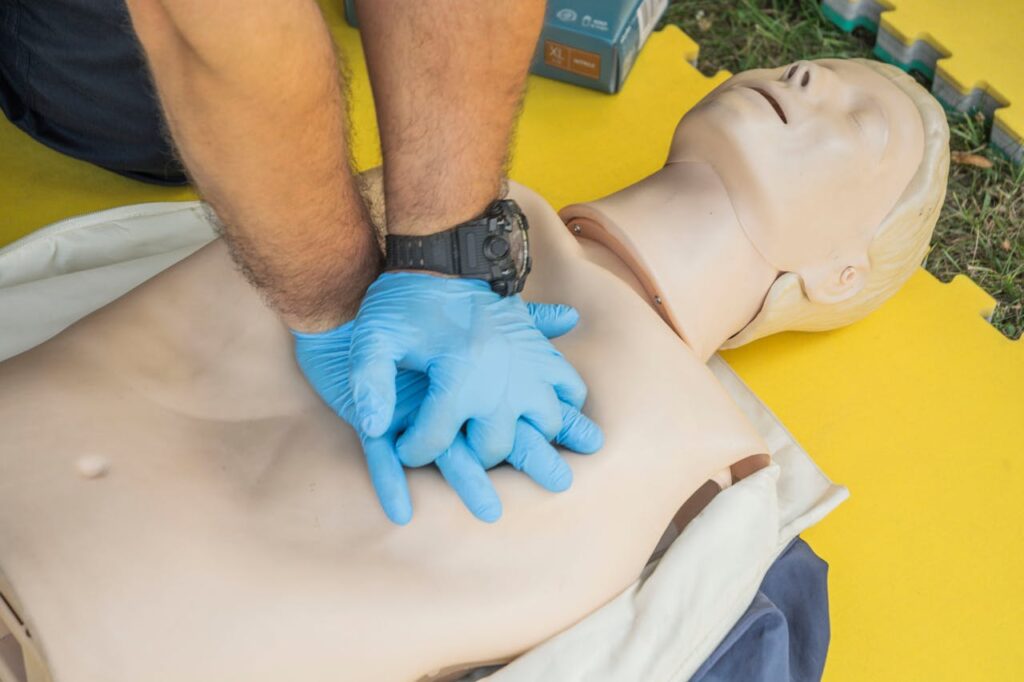
A troubling issue has been highlighted by recent studies: women who suffer cardiac arrest in public places are less likely to receive chest compressions from bystanders than men. Research suggests the difference is linked to fears about touching a woman’s breasts and concerns about being accused of harassment. Here’s what the data reveals, how to correctly perform CPR (Cardiopulmonary Resuscitation), and why it’s essential to overcome these fears.
Fears That Prevent CPR on Women
According to a St. John Ambulance survey of 1,000 Britons, nearly 25% admitted they’d be less likely to perform CPR on a woman in the street. Among men, one-third worried about being accused of “inappropriate touching” during the procedure, while among women, that concern was 13% (St. John Ambulance).
This “taboo” surrounding women’s chests creates a worrying disparity: only 68% of women receive bystander CPR, compared to 73% of men, according to the same survey. Another study involving over 39,000 out-of-hospital cardiac arrest patients in Canada and the U.S. found that in public places, 61% of women received CPR versus 68% of men (Dr. Alexis Cournoyer, European Emergency Medicine Congress, 2023).

The fear of being accused of sexual harassment is very real. A 2019 study published in AHA Journals with 550 participants found that 40% of men feared being accused if they needed to expose or touch a woman’s chest to perform CPR.
How to Perform CPR on Women: The Correct Procedure
The CPR technique is the same regardless of the victim’s gender. According to cardiologist Dr. Jason Kovacic and instructor Ms. Guthrie, rescuers should:
• Place your hands on the sternum, which is in the center of the chest, between the breasts, without needing to touch them directly.
• Remove bulky clothing to access the chest; the bra can stay on during compressions unless a defibrillator is needed.
• Remove the bra if using a defibrillator, since metal underwires can interfere with the shock.
• Perform firm, rapid compressions at the correct rate — about 100 to 120 compressions per minute, in cycles of 30 chest compressions followed by two rescue breaths.
Jordan Davison, Community Experience Manager at St. John Ambulance, emphasizes:
“All bodies are the same when it comes to CPR, and everyone deserves the best possible chance of survival.”
Dr. Benjamin Abella, from the University of Pennsylvania, adds:
“In theory, you’re pressing between the breasts, on the sternum — not on the breasts themselves.”
The Impact of Fear on Survival Rates
Each year, more than 30,000 people suffer out-of-hospital cardiac arrest in the UK, with less than 10% surviving (British Heart Foundation). Immediate help — with CPR and defibrillation — can double survival chances.
However, fear of touching a woman or exposing her chest hinders access to this life-saving intervention. Studies show that over 8,200 women in England and Wales could have survived if they had received the same level of care as men (analysis 2003–2013).
In Canada, the U.S., and Australia, statistics reveal that women are less likely to receive CPR, even from trained professionals such as paramedics — highlighting the need for greater training and awareness.
Innovative Training to Overcome Taboos
To help reduce bias and better prepare people to act, a New York–based agency developed the “Womanikin” — a CPR training manikin with silicone breasts to help students practice performing compressions correctly on a female chest.
This method is already being used in Canada, the U.S., and Switzerland, and has gained attention in Australia, promoting the idea that touching the chest to perform CPR is necessary and safe when done properly.
Acting Without Fear Saves Lives
The gender gap in emergency cardiac care is alarming, but it can be overcome through education and training.
As Dr. Cournoyer stressed:
“Performing CPR is a matter of medical urgency — not gender or social fear.”
Sources: