The futurist who predicted the rise of AI now says humans are just years away from eternal life
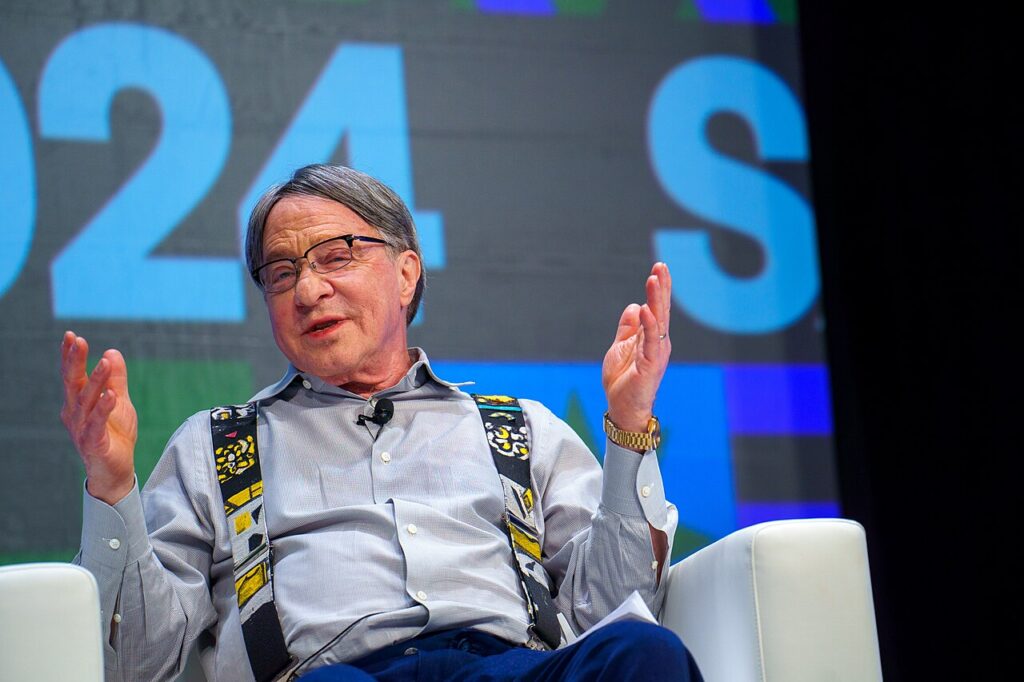
What if you never had to age again? What if science were just a few years away from making death a choice, rather than an inevitability? According to Ray Kurzweil, one of the world’s leading futurists, that future is closer than we think.
Ray Kurzweil: One of the Greatest Futurists of Our Time
Raymond Kurzweil is widely recognized as one of the most influential futurists today. Born in 1948, he has made his mark as an inventor, author, and artificial intelligence expert, spending decades developing technological innovations that drive science and engineering and that profoundly transform society and human interaction with technology.
Innovations and Achievements
Kurzweil, a graduate of the Massachusetts Institute of Technology (MIT), revolutionized technology with breakthroughs like optical character recognition and text-to-speech conversion. He’s been honored worldwide, receiving the National Medal of Technology and Innovation in 1999 from then-U.S. President Bill Clinton at the White House.
Google’s Chief Futurist and Visionary Author
Today, Kurzweil serves as a Google principal researcher and futurist, and he’s a prolific writer known for his visionary insights on the technological future of humanity. His most influential works include The Singularity Is Near (2005), in which he predicted that by 2030, humans would achieve immortality. In the sequel The Singularity Is Nearer (2024), he delves deeper into the rapid advancements in AI, biotechnology, and nanotechnology, exploring the radical transformations these innovations might bring to society. His books are hotly debated in scientific and tech circles and are a reference point for scholars and futurism enthusiasts alike.
Track Record of Predictions
- In 1990, Kurzweil predicted that a computer would defeat a world chess champion by 1998. This came true in 1997, when IBM’s Deep Blue defeated Garry Kasparov.
- In 1999, he forecast that computers would match human intelligence across all domains by 2029.
- He also anticipated the rise of wearable technology, predicting the advent of compact computers and smartphones.
- Furthermore, he saw AI as becoming essential to daily life, and foresaw the expansion and transformation of global communication via the internet.
- Another bold prediction: 3D printing, which he believed would allow the creation of personalized products — even artificial organs — a field now explored by modern science.
A Bold Prediction: Immortality by 2030
According to Kurzweil, humanity may achieve a form of immortality as early as 2030. This idea hinges on the concept of a technological singularity, a moment when advances in AI, biotechnology, and nanotechnology converge to surpass human biological limitations.
The Pillars of Technological Immortality
Kurzweil argues that this possibility depends on three main pillars:
- Life Extension Through Technology
He suggests we’re approaching the “longevity escape rate,” a point at which medical advances will increase life expectancy by more than one year for each passing year. Key technologies in this area include nanorobots — microscopic devices that could travel through the bloodstream to repair cells, fight disease, and deliver medications directly to target cells. - Human-Machine Integration
Neural implants and direct interfaces between the brain and AI could boost our cognitive abilities and allow us to store memories and consciousness digitally, creating a kind of “digital immortality.” - Genetic Editing and Regenerative Medicine
Through gene therapies and stem cell research, age-related diseases could be eradicated or even reversed.
Though these ideas sound futuristic, they are grounded in real scientific advances. Companies like Neuralink, founded by Elon Musk, are already implanting brain chips and developing interfaces between the human brain and machines. Meanwhile, biotech researchers are actively investigating ways to slow or reverse aging.
Immortality: A Revolution with Deep Implications
The idea of immortal humans raises critical demographic, ethical, and economic questions, such as:
- Demographics & Resources: How would we manage overpopulation and sustain natural resources in a society where no one dies naturally?
- Ethics & Human Identity: If consciousness is transferred into a digital medium, is that copy still “human”?
- Economic Inequality: Will access to immortality technologies be restricted to the wealthy, further widening the gap?
- Professional & Social Impact: How would we redesign work and retirement in a world where aging and death no longer exist?
Immortality: Dream or Reality?
Ray Kurzweil has proven that his predictions can’t just be dismissed. But will he get this one right, too? There are still many challenges to overcome, and immortality by 2030 remains a controversial idea.
If it does happen, it won’t just change how we relate to life and death — it will reshape the very structure of society as we know it.
Do you believe such a future is possible?