An investigation identified 1,046 channels in 33 languages. The United States, Mexico, Brazil, and Spain account for 303 of them. In the videos, white-coated avatars promise cures for cancer, Alzheimer’s disease, and diabetes.
What You Need to Know
- The “number one oncologist” does not exist. “Dr. Richard Ben” promises to make 100% of cancers disappear within 24 hours, but he is an AI avatar. There are 1,046 such channels in 33 languages, with nearly 1.84 billion views.
- The scam is profitable and has already claimed victims. Channels charge for memberships, tips, and guides. In Brazil, the BBC found accounts of elderly viewers who swapped their medications for foods and home remedies after watching the videos.
- Many channels remain online. Google removed 46 channels in Brazil and faces a lawsuit of roughly $20 million brought by two civil society organizations, not the government. In the U.S., no authorities have acted publicly.
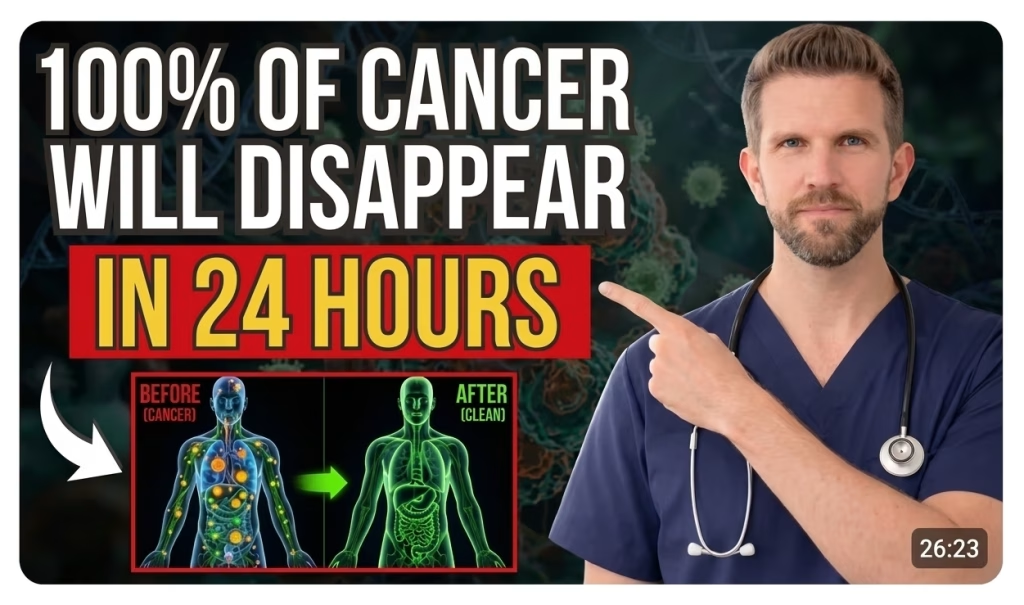
“Dr. Richard Ben” introduces himself as “the number one oncologist.” A video thumbnail promises to make “100% of cancers” disappear within 24 hours. There’s just one problem: the doctor doesn’t exist. He is an avatar created with artificial intelligence — and he is far from the only one.
An Army of Fake Experts
An investigation by the Spanish fact-checking site Maldita.es identified 1,046 YouTube channels featuring AI-generated fake “doctors.” The content appears in 33 languages. Together, the channels have published more than 96,000 videos, amassed 23.7 million subscribers, and generated nearly 1.84 billion views.
The growth is recent and accelerating: about 77% of the channels emerged between January 2025 and July 2026. During that period, the new channels gained 13 million subscribers.

The International Connection
According to the country information available on the platform, 717 channels were associated with 54 countries. The United States, Mexico, Brazil, and Spain accounted for 303 of them — 42.3% of the total. English, Spanish, and Portuguese were among the most common languages.
There are two caveats, however: the investigation does not say how many views came from U.S. users, and the country associated with an account does not prove where the people behind it are actually located.
How the Scam Works
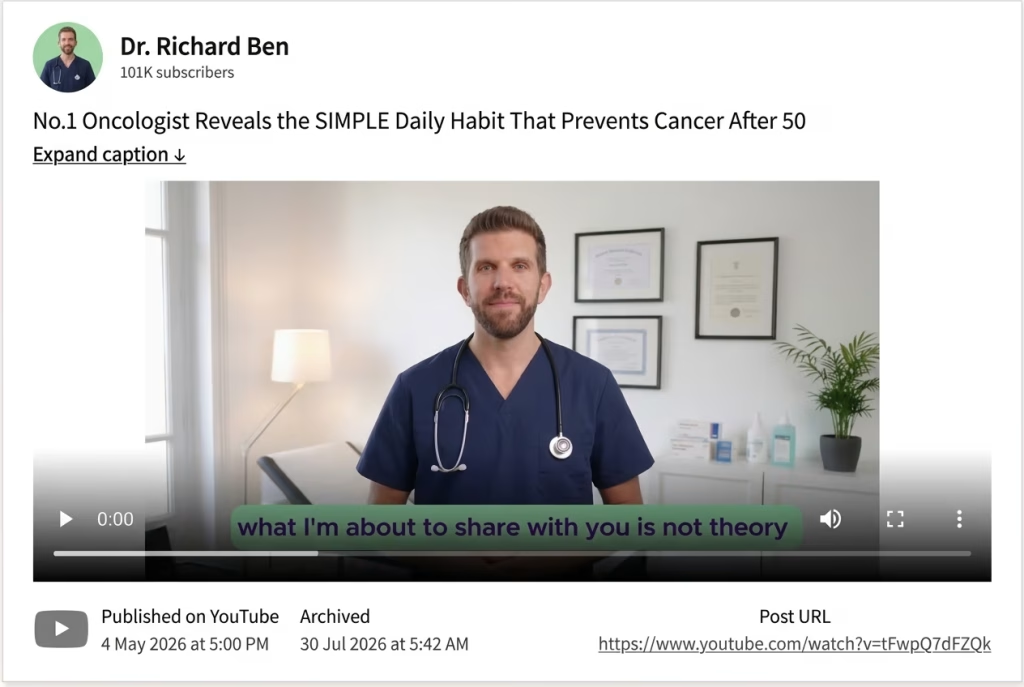
The formula is convincing: a white coat, a stethoscope, a doctor’s office in the background, and names such as “Dr. Laura Mendoza” or “Dr. John Meyers.” The descriptions claim “25 years of experience” or promise to reveal “the truth” about health.
Then come the miracle cures: a fruit to “say goodbye to Alzheimer’s disease,” seven fruits that “kill cancer cells,” or a food that promises to reverse diabetes.
Often, the most extreme claims appear only in the thumbnail. In the case of “Dr. Ben,” the video itself discusses habits presented as prevention — a far cry from the 24-hour cure advertised in the image. But some viewers may never watch the video at all and may be left only with the thumbnail’s false promise.
“There is no magic diet,” oncology nutritionist Marta Villarino told Maldita.es. No single food cures cancer, and Alzheimer’s disease currently has no cure. A disclaimer saying “AI-generated content” or “for educational purposes” does not turn a false claim into a true one, either.
And not all the faces are invented. In Brazil, at least five channels used the likeness of ENT specialist Hélio Brasileiro without his permission. He filed a police report. The fraud also exploits the identity and credibility of real medical professionals.
Follow the Money
Misinformation attracts an audience — and attention can be turned into money. One channel charges memberships ranging from about $2 to $27 a month. Others ask for tips through Buy Me a Coffee or sell $9 guides promising to help people over 60 “improve their health, relieve pain, and regain true well-being.”
Associated Instagram accounts promote supplements, some without regulatory approval. And the content does not stay on YouTube: at least one associated Facebook account posts similar videos without any AI label whatsoever.
The Harm Is Already Real
The risk is not merely theoretical. An investigation by BBC News Brasil examined 29 Portuguese-language channels with more than 70 million views. Among roughly 27,000 comments, it found elderly viewers saying they had replaced their medications with foods, plants, and home remedies.
“I didn’t realize it was artificial intelligence. I thought he was a real doctor,” an 82-year-old woman told BBC News Brasil.
After the reports, the Brazilian government notified Google and demanded that the content be removed within 72 hours or that the artificial characters be clearly identified. The company removed 46 channels and 11 videos, citing fraud and identity theft, and said another 32 channels had already been taken offline.
Separately, two Brazilian organizations — the Instituto de Fiscalização e Controle (IFC) and the Instituto Tecnologia e Equidade (IT&E) — filed a public civil lawsuit against Google. They are seeking R$100 million (about $20 million) in collective moral damages. The lawsuit is independent of the government’s notice.
What About the United States?
As of this publication, no public action by the FTC, the FDA, or a state attorney general had been identified specifically targeting YouTube over this network. That does not mean U.S. authorities ignore medical fraud: the FDA maintains guidance on the subject and warns against false or unproven claims about treatments.
The Maldita.es investigation states that many of the identified channels remained active. For users in the United States, that means a video being available on the platform does not necessarily mean its claims have been verified.
How to Protect Yourself
- Check the medical license. Look up the state medical board where the person claims to practice. DocInfo, operated by the Federation of State Medical Boards, compiles information about licensed physicians.
- Confirm the identity. A name in a registry does not prove that the channel belongs to that person — the likeness may have been cloned. Cross-check it with the doctor’s or institution’s official website.
- Be skeptical of guaranteed cures. Results within hours, “secrets doctors don’t want you to know,” and links to purchases or donations are all red flags.
- Don’t change your treatment because of a video. Talk to the healthcare professional responsible for your care.
- Report it. From the video menu, YouTube allows users to report content for reasons including medical misinformation or impersonation.
A white coat on a screen does not prove medical credentials. And a viral promise is no substitute for scientific evidence.
Sources and References
- Maldita.es — YouTube’s fake doctors: over 1,000 channels created using AI and how the platform allows nearly 100,000 videos in 30 languages — Read the investigation
- BBC News Brasil — Google removes more than 40 channels featuring AI-generated fake doctors after BBC News Brasil reports — Read the report
- UOL — YouTube sued for R$100 million over AI-generated fake doctors — Read the report