Anthropic study reveals the gap between technical capability and the economic viability of automation
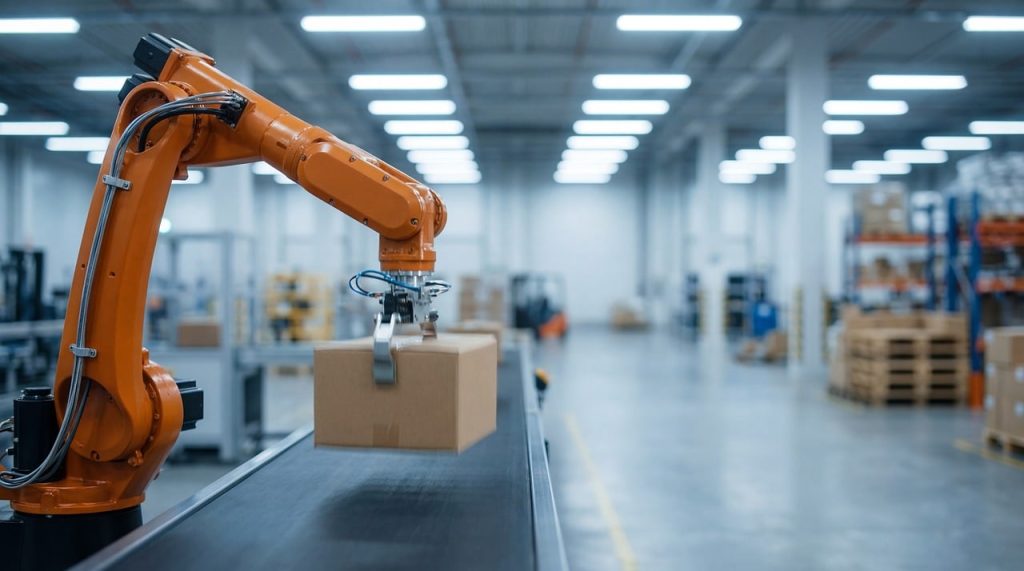
What You Need to Know
- According to an Anthropic study, robots can already perform 74% of physical tasks in the U.S. under certain circumstances, but are cost-competitive for only 0.3% of the work.
- If robot prices continue to decline by about 3% per year, as they have in recent decades, it would take approximately 40 years for them to become cost-competitive for 10% of human work.
- Even in a scenario of accelerated technological progress, with quality-adjusted costs falling up to 4× faster and robot capabilities improving 2× faster, Anthropic estimates that 50% of physical work would only become cost-competitive around 2050.
Most robots still depend on highly structured environments, such as industrial assembly lines. Outside these controlled settings, the challenges increase dramatically.
According to the study, today’s robots can already perform 74% of physical tasks in the United States — equivalent to 34% of all working hours. The major barrier is cost: robots are cost-competitive with human labor for only 0.3% of the work.
The factor that changes everything: cost
If robot prices continue their historical decline of about 3% per year, as observed since the 1990s, Anthropic estimates it would take roughly 40 years for robots to become cost-competitive for 10% of human work.
| Cost Scenario | Cost Trend | Estimated Impact |
| Historical pace | 3% decline per year | 10% of human work becomes cost-competitive in about 40 years |
| Accelerated scenario | Quality-adjusted costs fall up to 4× faster; capabilities improve 2× faster | 50% of physical work becomes cost-competitive around 2050 |
| Accelerated scenario | Quality-adjusted costs fall up to 4× faster; capabilities improve 2× faster | 90% of physical work becomes cost-competitive around 2103 |
At the historical rate, 50% of physical work would not become cost-competitive until around 2085. Even with much faster technological progress, large-scale physical automation would still be decades away.
The main barriers identified by the study are:
- Technical capability: Limits automation for about 70% of physical tasks, mainly because of shortcomings in manipulation and other physical skills.
- Cost: For nearly all tasks, robot costs would also need to fall substantially.
- Regulation: Current regulations prevent robots from performing about 14% of physical tasks, particularly in healthcare, protective services, and education.
- Human preferences: Hold back automation for about 25% of physical tasks, including activities such as changing diapers and greeting and seating restaurant guests.
Where automation already makes economic sense
Not every occupation is equally far from cost competitiveness:
- Packers and packagers: Robots can perform tasks accounting for 97% of their working time. The estimated annual cost of robots to perform that work is about $45,000, compared with roughly $49,000 in human compensation — making robots about $2,500 cheaper per year. Employment in the occupation has fallen 22% since 2015, although other factors may also have contributed to the decline.
- Taxi drivers: Among the occupations with the highest robot exposure, largely because of the capabilities of autonomous vehicles.
- Welders: Robots can weld autonomously, but automating the broader set of tasks performed by human welders requires robots costing around five times more than human labor.
- Dishwashers, janitors and cleaners: Robotic alternatives remain several times more expensive than human labor.
Text-based AI follows a different logic
Unlike physical robots, language models such as Claude are software and can be copied and distributed without the same hardware costs.
Anthropic estimates that around half of all work is exposed to LLMs — meaning tasks for which an LLM could, in theory, halve the time required to complete them.
This measures theoretical productivity potential, not automatic job loss. In previous research, Anthropic found no systematic increase in unemployment among workers in the most AI-exposed occupations since the end of 2022, although it also found suggestive evidence of slower hiring among younger workers in more exposed occupations.
Robots + AI: Together they expand the reach
When considering both robots and language models, potential job exposure rises significantly:
- Transportation and material moving: From less than 15% with LLMs alone to about 90% when robots are included.
- Office and administrative support: Rises to nearly 100%.
- Overall: From around 50% with LLMs alone to 81% when robots are included.
Important note: 81% exposure does not mean that 81% of jobs will be eliminated. The study measures how much work current technologies could potentially perform, not actual job displacement.
What remains relatively protected
Jobs requiring substantial in-person social interaction, physical contact, delicate manipulation, or work in unpredictable environments remain difficult to automate.
Examples include personal care, healthcare support, community and social services, and installation and repair work.
Optimism about robots may be premature
Deepu Talla, Nvidia’s Vice President of Robotics and Edge AI, has described the current period as a “golden age of robotics and physical AI,” reflecting rapid advances in AI models and simulation technologies.
Anthropic’s study, however, offers a more grounded perspective: better intelligence solves only part of the problem. Robot capabilities still have important physical limitations, while hardware costs need to fall substantially for widespread automation to become economically viable.
Ultimately, the key question is not simply whether a robot can perform a task, but whether it can do so reliably and at a lower cost than a human worker.
For now, the answer for the vast majority of physical work is still no — and that is likely to remain the case for many decades.
Sources & References
Primary Source
- Anthropic Research — What Work Can Robots Do?
Core analysis on technical capability, economic viability, and physical automation timelines.
Supporting Sources
- Anthropic Research — Labor Market Impacts of AI
Supporting data on the impact of language models (software) and knowledge worker productivity.
- NVIDIA On-Demand — GTC Keynote Session: Humanoid Robotics & AI
Industry executive perspective on the advancement of humanoid robotics.