A New Proposal for an AI-Dominated Future
What You Need to Know ⚡
- High Income, Not Just Basic: Musk now advocates for a high standard of living for all, powered by robots, making both savings and poverty obsolete.
- Abundance vs. Purpose: The core debate is whether “free money” brings true freedom or turns humans into “zoo animals” stripped of utility.
- The End of Inflation: The bet is that AI will produce so much, so fast, that product prices will plummet, even with everyone earning significantly more.
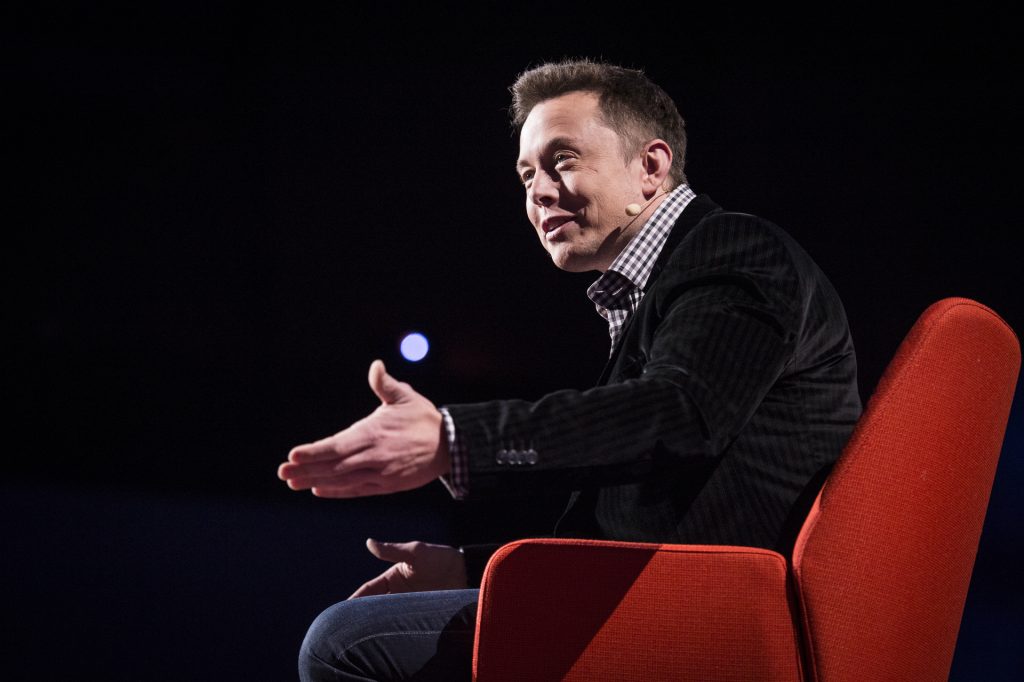
On Friday, April 17, entrepreneur Elon Musk returned to the center of the global stage by defending a bold solution for a potential mass unemployment scenario caused by Artificial Intelligence.
Initially associated with Universal Basic Income (UBI), the concept has evolved in his vision. According to Musk, the idea has shifted toward what he calls “UNIVERSAL HIGH INCOME”, a more comprehensive and ambitious version of the traditional model.
👉 Instead of merely guaranteeing a survival minimum, the proposal now seeks to offer a superior standard of living for the entire population, sustained by a highly automated economy.
During a speech at the Saudi Arabia-US Investment Forum, Musk stated that, in the best-case scenario, AI could generate:
“A level of prosperity… that we cannot yet imagine.”
From UBI to Universal High Income: The Evolution of an Idea
Musk’s stance is not new. He has been an advocate for Universal Basic Income for years. In 2019, he publicly supported then-presidential candidate Andrew Yang, who promoted the “Freedom Dividend.”
With the accelerated advancement of AI, Musk expanded this vision:
👉 UBI evolves into “UNIVERSAL HIGH INCOME,” capable of covering not just basic needs, but a luxurious standard of living.
He had previously made similar predictions. In December 2025, he declared:
“There will be no poverty in the future,” suggesting that universal income would eliminate the very necessity of saving money.
Sam Altman Also Supports Universal Basic Income
OpenAI CEO Sam Altman is also a leading proponent of UBI. Altman argues that the economic transformation caused by AI will require new wealth redistribution mechanisms. His company has already outlined proposals that include:
👉 A Public Wealth Fund, designed to distribute the massive gains generated by Artificial Intelligence.
Despite the public and legal disputes between Musk and Altman, both converge on this point: AI may require a profound overhaul of the current economic model.
The Critique: Marc Andreessen’s Warning
Not everyone agrees with this approach. Tech investor and close Musk ally Marc Andreessen is a primary critic of UBI. In his Techno-Optimist Manifesto (2023), he stated:
“We believe Universal Basic Income would turn people into zoo animals, to be farmed by the State.”
Andreessen argues that humans are hardwired to be:
- Productive
- Useful
- Proud of their work
According to him, UBI policies could create dependency and destroy the incentive for productivity.
Does History Show a Different Path?
Despite the fears, there is a strong counter-argument to mass unemployment: 👉 Technology has always replaced tasks, but it has never eliminated work as a whole.
Throughout more than 300 years since the Industrial Revolution:
- Traditional jobs disappeared.
- New industries emerged.
- Society continuously reinvented itself.
The Dangers of Universal Basic Income
A major risk pointed out by critics is straightforward:
👉 UBI may disincentivize work.
Several studies suggest that unconditional subsidies can lead people to:
- Work less or reduce their hours.
- Leave the labor market entirely, especially if the payments are high enough.
This raises a crucial question:
👉 What if the solution ends up aggravating the problem?
Future Jobs and a Delicate Balance
The debate over Universal Basic Income—and its evolution into Universal High Income—is just beginning.
- On one side: Elon Musk and Sam Altman believe in an AI-driven future of abundance.
- On the other: Critics like Marc Andreessen warn of social and economic risks.
The core takeaway is clear:
- AI will eliminate current jobs.
- But it will also create new professions, sectors, and opportunities.
History shows that work doesn’t disappear—it evolves.
Final Reflection
The greatest challenge won’t just be redistributing wealth, but ensuring that people remain motivated to produce, innovate, and work. Because, in the end, the danger isn’t just technology-driven unemployment—it’s the possibility of a society where work ceases to be necessary, or even desired.
Sources:
- Saudi Arabia’s Future Vision. [Video]. YouTube. Available at: https://www.youtube.com/watch?v=LyouLvz6iiY
- CNBC. Elon Musk tweets support of 2020 Democratic presidential hopeful Andrew Yang. Available at: https://www.cnbc.com/2019/08/12/elon-musk-tweets-support-of-democrat-presidential-hopeful-andrew-yang.html
- NDTV News. Elon Musk Predicts End Of Poverty, Says “There’s No Need To Save Money”. Available at: https://www.ndtv.com/feature/elon-musk-predicts-end-of-poverty-says-theres-no-need-to-save-money-therell-be-universal-high-income-9836934
- TechSpot. Sam Altman envisions a future where “Universal Basic Income” is replaced by “Universal Basic Compute”. Available at: https://www.techspot.com/news/102975-sam-altman-envisions-future-where-universal-basic-income.html
- Marc Andreessen. The Techno-Optimist Manifesto. MasterResource. Available at: https://www.masterresource.org/energy-debate/techno-optimist-manifesto-andreessen/