Russian foreign minister’s remarks blend religion, war, and serious accusations against the West
🔎 WHAT YOU NEED TO KNOW
• Lavrov’s “crusade”: By invoking “satanism,” he frames the war as a battle between good and evil — with Russia portraying itself as the last moral barrier against the West.
• The battle over the sacred: Churches and monasteries have become symbols of the conflict — it’s no longer just about territory, but also spiritual identity.
• Narrative warfare: By linking the West to scandals such as the Epstein case, Moscow seeks to undermine Western influence and global credibility.
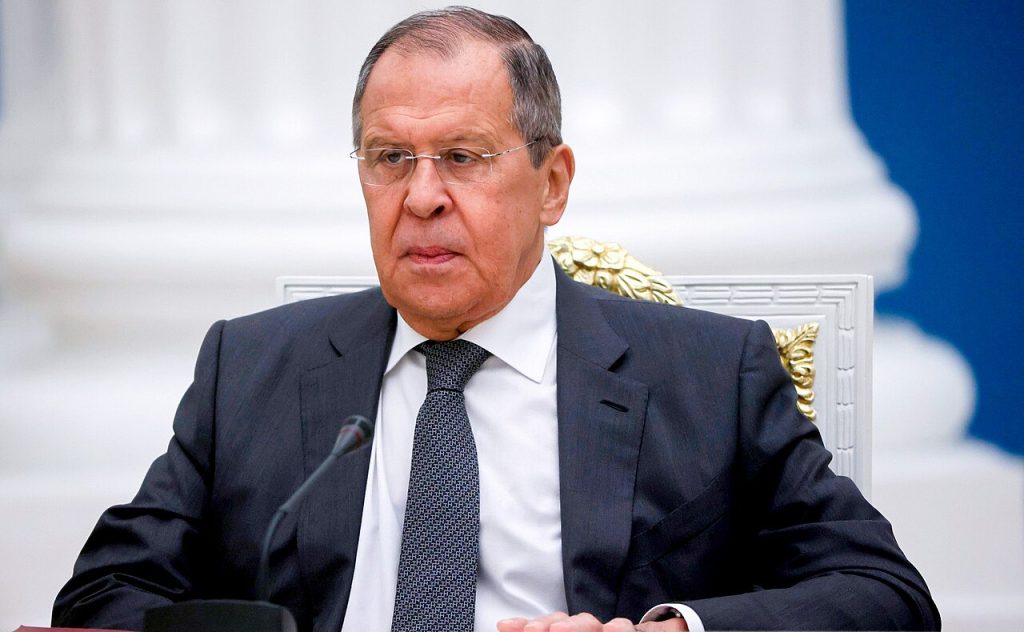
Russian Foreign Minister Sergey Lavrov once again sparked international controversy after claiming that there is “rampant satanism” in several European countries amid the ongoing tensions between Russia, Ukraine, and what Moscow refers to as the “collective West.”
The remarks were made during an official reception hosted by Russia’s Foreign Ministry for Orthodox Easter, held in Moscow on April 22, 2026, in the presence of diplomats and religious leaders.
Religious repression in Ukraine at the center of criticism
According to Lavrov, the Ukrainian government has been carrying out a systematic campaign against the Ukrainian Orthodox Church, which historically maintained ties to Moscow.
“The Ukrainian Orthodox Church has been persecuted for more than a decade,” the minister stated.
He cited:
• Forced seizures of churches
• Cases of vandalism
• Harassment of clergy and worshippers
• Criminal investigations over alleged collaboration with Russia
Since the start of the war in 2022, authorities in Kyiv have intensified measures under the justification of combating Russian influence inside the country.
Dispute between Orthodox churches deepens tensions
Another point highlighted by Lavrov was the support given by the government of Volodymyr Zelenskyy to the Orthodox Church of Ukraine, considered a rival to the structure linked to the Moscow Patriarchate.
According to Russia, the church is viewed as:
• Schismatic
• Politically backed by the West
• Part of a rupture with the region’s “spiritual roots”
“The Ukrainian leadership has rejected its spiritual and civilizational roots,” Lavrov declared.
Historic monastery becomes symbol of the conflict
The Russian foreign minister described Ukraine’s initiative to inspect relics at the historic Kyiv Pechersk Lavra monastery as “outrageous and repulsive.”
According to him, the inventory process conducted by Ukraine’s Ministry of Culture would be a way to:
“Conceal legalized blasphemous practices.”
Reports that emerged in March 2026 claimed that Ukrainian authorities, with police support, allegedly forced entry into areas of the monastery, including catacombs where Christian saints are buried.
“Rampant satanism”: direct accusation against Europe
It was in this context that Lavrov escalated his rhetoric and made one of his most controversial statements:
“Several European countries either turned a blind eye to or directly supported these actions… there is rampant satanism in those countries as well.”
The statement reinforces the Russian narrative that the West is:
• Abandoning traditional religious values
• Supporting actions viewed as offensive to the Orthodox faith
• Acting ideologically against Russia
Not the first time: Western elites also targeted
This was not an isolated statement. In February 2026, Lavrov had already associated the West with what he called “pure satanism” while commenting on documents related to the case involving Jeffrey Epstein.
“This goes beyond human comprehension… it is pure satanism,” he said at the time.
According to Lavrov, the documents would allegedly reveal a hidden side of Western elites, reinforcing criticism of the morality of governments and influential groups.
In the same context, Russian Foreign Ministry spokeswoman Maria Zakharova stated that the case exposed extreme levels of corruption in the West.
Analysts reject the Russian narrative
The accusations, however, are strongly disputed by international analysts.
The Institute for the Study of War argues that the Ukrainian Orthodox Church linked to Moscow does not operate as an independent entity, but rather as:
• An extension of the Russian Orthodox Church
• An instrument of Kremlin influence
• Part of a broader “hybrid warfare” strategy
According to the institute, the church has been used to: Spread pro-Russian narratives, expand influence across former Soviet republics, and justify military actions.
Religion, politics, and the war of narratives
The statements made by Sergey Lavrov illustrate how the conflict between Russia and Ukraine extends far beyond the battlefield, involving:
• Religious disputes
• Cultural identity
• Ideological narratives
For readers, it becomes clear that the issue goes beyond religion itself — it is part of an ongoing battle of narratives between Russia and the West that continues to shape today’s geopolitical landscape.
Learn more:
RT: Lavrov warns of ‘rampant satanism’ in EU, Ukraine
The New Voice of Ukraine: Lavrov’s Easter speech shows Russia still uses religion to justify war, ISW says
Xinhua News: Sergey Lavrov and Western elites’ morality
Cover photo: Kremlin.ru / Presidential Press and Information Office (CC BY 4.0)