The Challenge of Wildlife and Roads
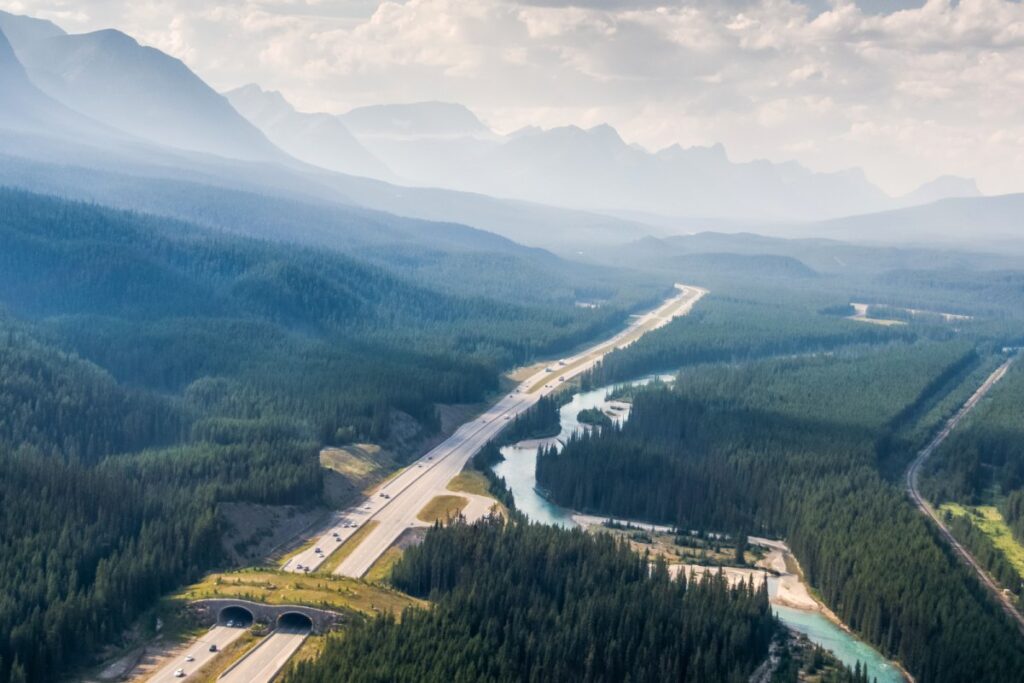
Many wild species in Canada need to cross highways and move beyond park boundaries to find shelter, food, mates, and raise their young. This movement, however, has long come with serious risks. Before the 1980s, about 100 large animals were killed every year in collisions along the busy Trans-Canada Highway that runs through Banff National Park. Beyond the environmental loss, these accidents also put drivers at risk, leading to high financial costs, severe injuries, and even human fatalities.
The Beginning of Innovative Solutions
In the early 1980s, the Canadian government and its transportation partners began expanding the highway and seized the opportunity to design innovative structures that would reduce collisions and reconnect fragmented landscapes. That’s when the first wildlife crossing projects in the country took shape.
CAD 12.6 million was invested in a more recent structure connecting Bow Valley Provincial Park to Banff National Park. This milestone highlighted the government’s commitment to large-scale conservation, becoming a model cited in articles, scientific studies, and international media reports.
The World’s Largest Road Ecology Study
Since then, the Canadian government and its partners have carried out the longest-running road ecology study in the world. Today, there are 49 crossing structures in the region: 42 underpasses and 7 overpasses, supported by 82 km (about 51 miles) of fencing.
The results are remarkable: collisions between vehicles and wildlife have dropped by more than 80%. For species such as elk and deer, the reduction reaches up to 96%. This means not only safer roads but also major financial savings. After all, a single collision with a large animal can cost thousands of dollars in property damage, medical care, and emergency response.
Species Benefiting from Crossings
The crossings are used by a wide range of animals, including bears, elk, lynx, and martens. Smaller species are also protected thanks to specially designed eco-passages, such as salamanders, frogs, snakes, and turtles—many of which are considered at risk of extinction.
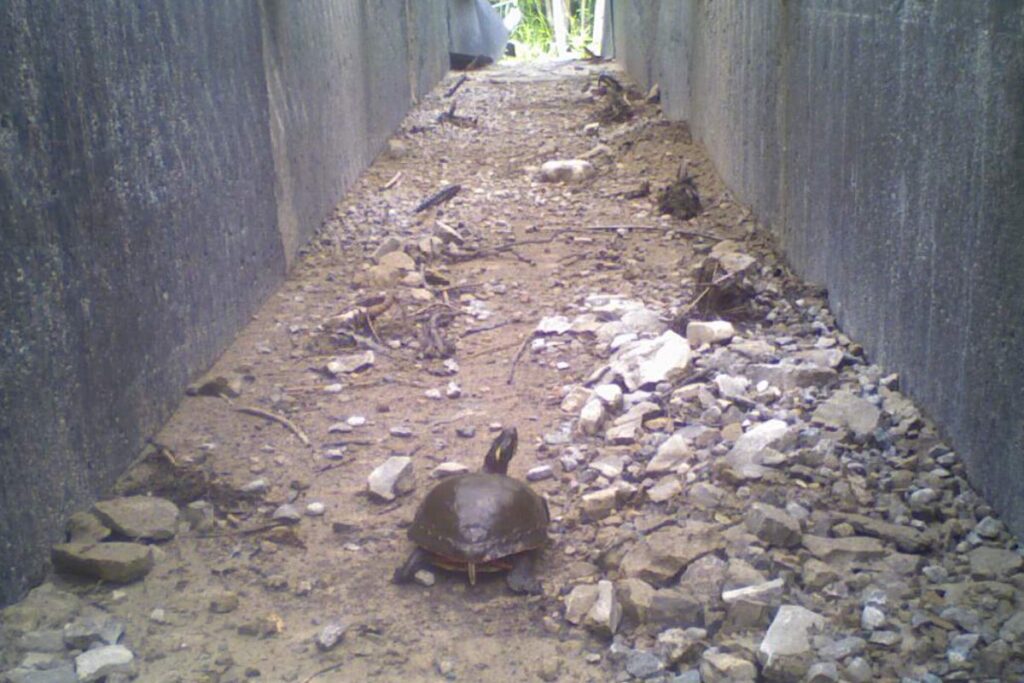
These structures, designed to accommodate different sizes of wildlife, represent a significant step forward in protecting Canada’s biodiversity.
A Model for the World
The pioneering project in Banff National Park inspired similar wildlife crossings in other areas, including Yoho and Kootenay national parks. Today, Canada is recognized as an international leader in highway planning and wildlife conservation.
The initiative not only protects animals but also saves human lives and helps reconnect ecosystems that have long been divided by roads and railways.
Shared Responsibility
To strengthen this protection, the Canadian government encourages visitors to follow simple guidelines:
- Respect speed limits;
- Never stop on the roadside to photograph wildlife.
These small actions go a long way in keeping both people and animals safe.
A Lasting Legacy
With millions of dollars invested, proven results, and global recognition, Canada’s wildlife crossing program has become a powerful example of how infrastructure and conservation can work hand in hand—preserving biodiversity while making roads safer for everyone.
Main source: Parks Canada