With automation, the company expects to save US$ 12.6 billion in labor costs between 2025 and 2027.
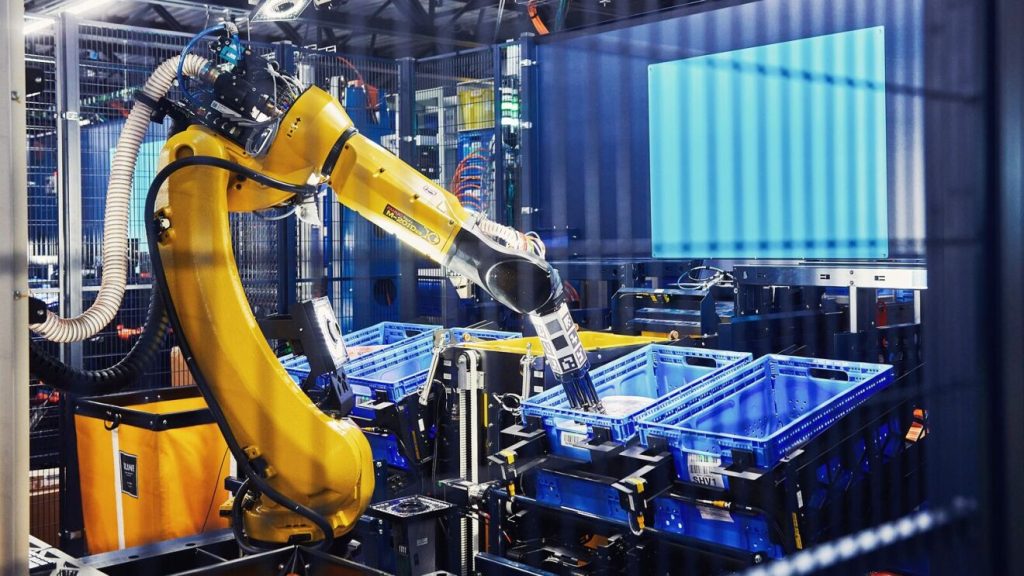
Amazon already operates with more than 1 million robots in its logistics centers — a figure approaching the total number of human employees — and plans to further expand the use of these machines in the coming years.
The information was confirmed by reports from The New York Times and The Wall Street Journal, based on internal documents and data provided by the company itself.
Automation could replace up to 600,000 jobs by 2033
According to projections cited by The New York Times, Amazon — the world’s second-largest private employer, with around 1.5 million employees, behind only Walmart, which leads with approximately 2.1 million workers — could replace up to 600,000 human jobs by 2033 as it accelerates automation across its logistics centers.
Leaked internal documents reviewed by the newspaper indicate that robots will allow the company to avoid more than 600,000 future hires over the next eight years, even as Amazon expects to double the volume of products sold by 2033.
Billion-dollar savings in labor costs
Automation also represents significant savings. According to documents cited by The New York Times, Amazon projects US$ 12.6 billion in labor cost savings between 2025 and 2027 thanks to the expanded use of robots and automated systems. In addition, the company estimates that automation generates savings of about 30 cents per product.
Despite this, Amazon told the newspaper that the leaked documents do not reflect its entire hiring strategy, noting that the reports represent only the perspective of a specific internal group.
Shreveport serves as an automation model
The Shreveport fulfillment center in Louisiana has been used by Amazon as a model for automation. According to The New York Times, the facility reduced staffing needs by 25% due to the intensive use of robots, while simultaneously increasing operational efficiency.
The site spans 3 million square feet, equivalent to 55 football fields, employs around 2,000 people, and uses approximately 1,000 robots, with plans for expansion.
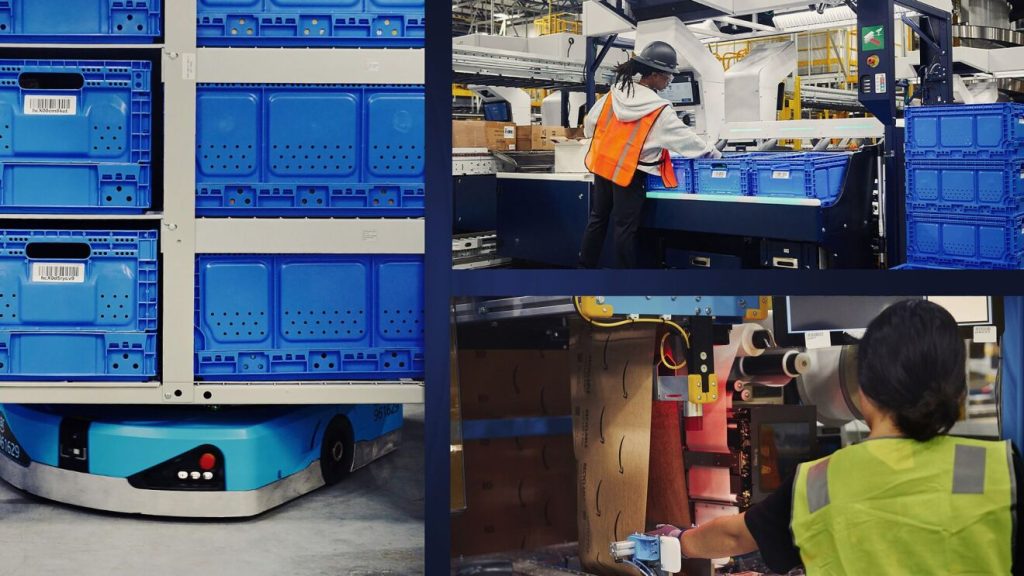
These systems operate at multiple stages of the logistics process, including sorting, stacking, packing, and shipping, always working alongside human employees. As a result, products move through the facility 25% faster than in other warehouses.
Robots already assist most deliveries
According to a report by The Wall Street Journal, about 75% of Amazon’s global deliveries are assisted in some way by robots. The newspaper also notes that the average number of employees per fulfillment center fell to around 670 last year, the lowest level in the past 16 years.
Meanwhile, productivity has surged: the number of packages shipped per employee rose to 3,870, up from just 175 a decade ago, according to the paper’s analysis.
Experts warn of job market impact
If these plans materialize, Amazon could become a “net job destroyer,” MIT professor and Nobel Prize–winning economist Daron Acemoglu told The New York Times. He argues that the advance of automation at a company of this scale could have profound effects on the labor market.
Company says it is creating new types of jobs
Amazon says robots free employees for more specialized tasks and reduce repetitive work. According to the company, more than 700,000 workers worldwide have already been trained for higher-paying roles, including positions related to robotics.
“Completely new jobs are being created,” such as robotics technicians, said Yesh Dattatreya, senior applied scientist at Amazon Robotics, in an interview with The Wall Street Journal.
CEO Andy Jassy also acknowledged in an interview with CNBC that the corporate workforce may shrink as artificial intelligence advances, but emphasized: “There will be other jobs.”