Protection of airspace or a trade barrier?
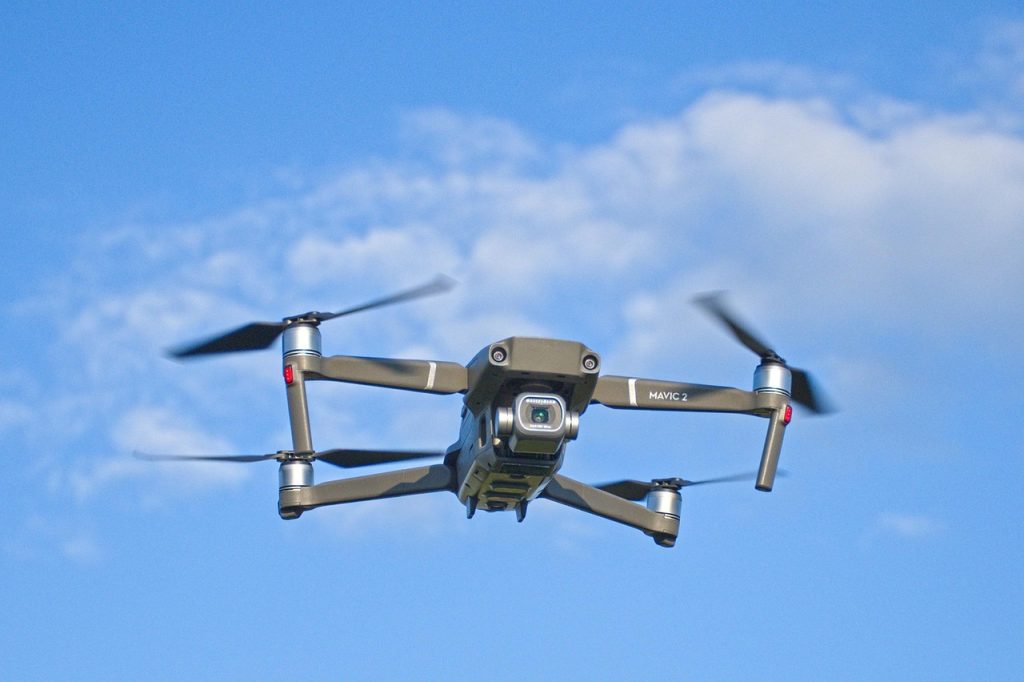
The decision by the United States Federal Communications Commission (FCC) to ban the entry of new drones manufactured abroad could represent a historic turning point for the global drone industry — with impacts that go far beyond the Chinese market.
The measure prevents new drones from manufacturers such as DJI and Autel from entering the U.S. market, under the justification of unacceptable risks to national security.
A decision that goes beyond China
Although the initial focus is on Chinese manufacturers, the FCC itself made it clear that the ban is not limited to China. According to the agency, all drones and critical components required for their operation, produced in foreign countries, pose risks to U.S. security, except for cases authorized by the Pentagon or the Department of Homeland Security (DHS).
The decision comes one year after the U.S. Congress approved a defense law requiring the suspension of Chinese drone sales if a security assessment confirmed risks — which, according to the FCC, was confirmed on December 23, 2025.
Why drones are so important in the United States
Foreign-made drones — especially Chinese ones — have become ubiquitous in the United States and are widely used in areas such as:
• Agriculture, for crop spraying and monitoring
• Mapping and cartography
• Law enforcement, including police training and forensic analysis
• Film and audiovisual production
The FCC acknowledges the potential of drones for innovation and public safety, but states that criminals, hostile foreign actors, and terrorists can also use them as weapons or surveillance tools.
Global events accelerated the decision
One of the central factors behind the ban is major events that the U.S. will host in the coming months, such as:
• The 2026 World Cup
• America250 celebrations
• The 2028 Summer Olympics in Los Angeles
According to the FCC, these events increase the risk of attacks and unauthorized surveillance on U.S. soil.
What users and companies in the U.S. are saying
The decision has divided opinions.
In Texas, Gene Robinson, who owns nine DJI drones used in police training and forensic analysis, said the restrictions harm professionals who have come to depend on these devices due to their versatility, high performance, and affordable prices.
He lamented that the United States outsourced production to China and said the country is now facing the consequences of that choice.
“Now we are paying the price. To regain our independence, there will be initial difficulties.”
On the other hand, Arthur Erickson, CEO and co-founder of Hylio, an American company focused on developing drones primarily for the agricultural sector, believes that a potential exit of DJI from the U.S. market could open space for domestic manufacturers.
According to him, new investments are being directed toward expanding the production of spraying drones, which could help reduce prices in the medium term.
Despite this, Erickson criticized the broad scope of the measure, calling it “absurd” and “unexpected”, as it affects all drones and critical components manufactured abroad.
DJI’s dominance in the U.S. market
The impact of the decision is even greater when considering the size of the affected company.
DJI, headquartered in Shenzhen, is the world’s largest drone manufacturer and accounts for nearly 80% of commercial drones sold in the United States, according to Drone Industry Insights.
Its main Chinese competitor, Autel, trails far behind in market share.
What the Chinese company said
DJI said it was disappointed with the FCC’s decision. In a statement, the company said no evidence was presented to justify the risk allegations.
“Concerns about DJI’s data security are not grounded in evidence and reflect protectionism, contrary to the principles of an open market,” the company said.
What happens to drones already in use?
Despite the strictness of the new rule, there is an important transition provision for those who have already invested in foreign technology. The FCC made it clear that the update to the Covered List does not prohibit the importation, sale, or use of drone models that had been previously authorized before the rule took effect.
In practice, this means that consumers can continue using drones they already own or that were already legally on the U.S. market. The ban focuses on new models and future authorizations, ensuring that the current market does not suffer a sudden technological “blackout.”
What are the prospects under the ban
The FCC argues that the measure is essential to restore U.S. airspace sovereignty and reduce future risks. At the same time, the industry acknowledges growing pains, since foreign-made drones dominate the current market.
The outlook points to:
• Acceleration of domestic drone production
• Reorganization of the global supply chain
• A shift in the balance of the global drone market
More than a regulatory decision, the ban marks a new phase of the global technological dispute, with effects that could redefine who dominates the skies in the coming years.
This report was prepared and reviewed based on information published by: