The use of credit and debit cards is widespread in the U.S., providing convenience and speed in everyday transactions. However, it’s crucial to be aware of the risks linked to different payment methods—chip insertion, contactless payments, and online purchases. Below are the main threats and effective protection measures for each case.
Chip Card (EMV) Payments
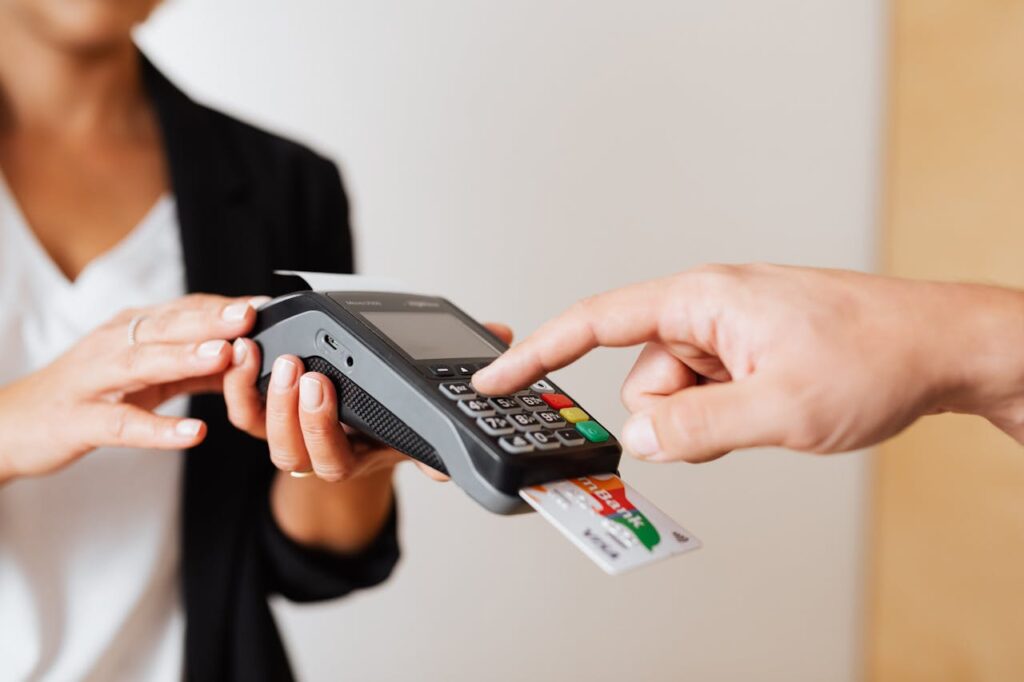
Inserting your card into a POS terminal is a traditional method, but it comes with vulnerabilities:
- Card skimming: Criminals may install skimmers on card readers to capture card data.
- PIN theft: Entering your PIN without shielding the keypad can expose it to bystanders or cameras.
- Malware on POS terminals: Some attackers deploy malware to trick users into inserting their card, exposing sensitive data.
How to stay safe:
- Inspect terminals for suspicious devices.
- Shield the keypad when entering your PIN.
- Regularly review account statements for unusual charges.
- Use strong, unique passwords for online banking and mobile apps.
- Prefer EMV chip cards over magnetic stripe cards.
Contactless Payments (Tap-to-Pay & Mobile Wallets)

Contactless payments via cards or apps like Apple Pay, Google Pay, and Samsung Pay are fast and convenient, but they carry specific risks:
- Unauthorized use: Lost or stolen cards may be used for low-value purchases without requiring a PIN.
- RFID skimming: Criminals with RFID readers may try to intercept card signals.
- Relay attacks: Hackers may intercept communication between your card/phone and the terminal.
- Weak encryption in older cards: Some older cards lack robust cryptography.
How to stay safe:
- Use RFID-blocking wallets or sleeves.
- Disable contactless payments if you don’t use them.
- Set up real-time transaction alerts with your bank.
- Keep your card or phone secure, especially in crowded areas.
- Favor mobile wallets, which use tokenization and biometric authentication for added protection.
Online Shopping Security

E-commerce is convenient, but it’s a common target for fraud. Protect yourself by:
- Avoiding public Wi-Fi for financial transactions.
- Using virtual card numbers (offered by many U.S. banks and issuers) for safer online payments.
- Checking that sites use HTTPS encryption before entering payment details.
- Enabling two-factor authentication (2FA) on banking apps and online accounts.
- Watching out for card-not-present fraud, where criminals use stolen card details for unauthorized online transactions.
How to stay safe:
- Shop only on trusted websites.
- Enable purchase notifications on your banking app.
- Report suspicious activity immediately—U.S. banks and card issuers typically offer Zero Liability Protection, ensuring you won’t be held responsible for fraudulent charges.
Additional Consumer Protections
Credit card networks such as Visa, Mastercard, and American Express provide Zero Liability programs and consumer protection benefits. These include reimbursement for fraudulent transactions, extended warranties, and purchase protection—making credit cards generally safer than debit cards for online and in-store purchases.
Future Trends in Card Security
The payments industry continues to evolve, with new technologies designed to combat fraud:
• Biometric authentication such as fingerprint or facial recognition for card use.
• Dynamic security codes that change periodically, replacing static CVV numbers.
• AI-powered fraud detection that monitors transactions in real time and blocks suspicious activity.