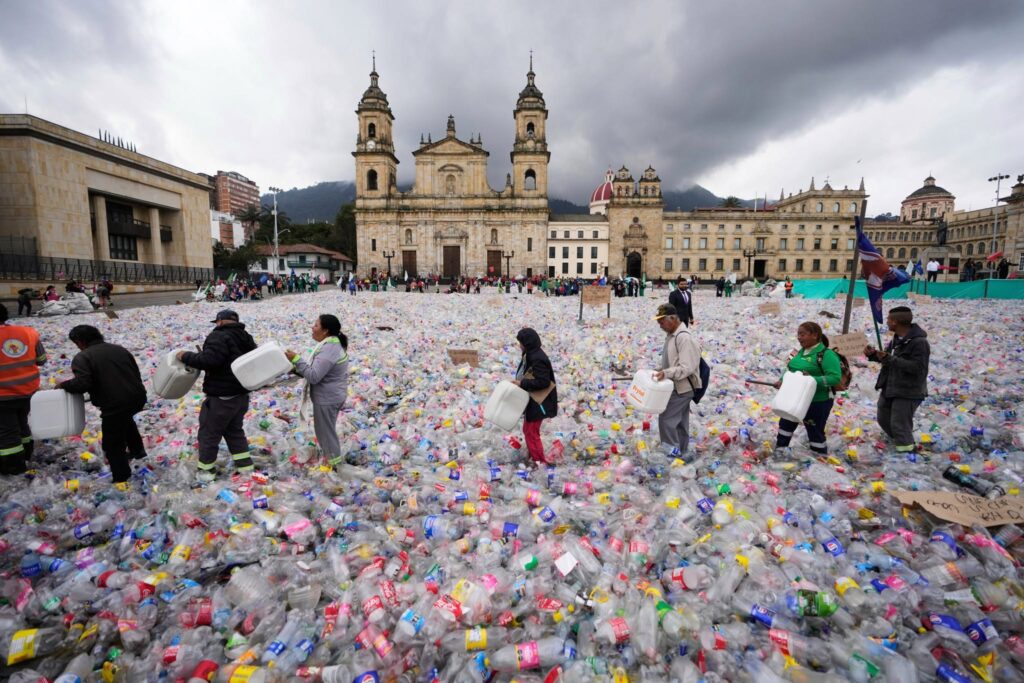
Dozens of recyclable material collectors from Bogotá staged a powerful protest by covering Plaza Bolívar with plastic bottles and other recyclables to denounce wage cuts and poor working conditions.
Protest and Visual Impact
On June 24, 2025, more than 100 waste pickers gathered in Bogotá’s Plaza Bolívar to protest the growing devaluation of their recycling work. With around 15 tons of plastic bottles scattered across the square, the demonstration created a visual layer of waste that reached ankle height, drawing the attention of residents, tourists, and authorities.
Who Are the Recyclers, and Why Are They Important for the Environment?
In Bogotá, a city of 8 million people, approximately 25,000 recyclers work daily collecting materials like plastic, scrap metal, and cardboard from homes, factories, and businesses. Most operate independently, pushing heavy carts through the streets and enduring exhausting 15-hour shifts under sun and rain just to make a living.
The Colombian capital does not offer a public recycling service, and it’s these informal workers who fulfill that role—responsible for recycling about 15% of the city’s 6,300 tons of daily waste. Their work plays a crucial role in urban sustainability and environmental preservation.
Demands and Financial Struggles
Nohra Padilla, president of the National Association of Recyclers of Colombia, emphasized:
“We want factories to pay a fair price for the materials we collect. Without our work, the landfills would be overwhelmed.”
The recyclers’ wages remain below the national minimum wage, which currently does not reach $360 USD per month. The workers are also demanding government coverage for healthcare and retirement contributions.
Drop in Recycling Prices and Rising Competition
Jorge Ospina, president of the ARAUS recyclers’ association, warned that the price paid by recycling plants for plastic has dropped significantly in recent months—partly due to the importation of new plastic, mainly from China.
Over the last two months, the price paid to his association per kilogram of plastic dropped from around 75 cents to 50 cents. As a result, he said he can now only afford to pay 25 cents per kilo to the waste pickers who deliver their collected plastic to ARAUS’s warehouse in Bogotá.
This dramatic price drop has made recycling work increasingly unprofitable. To make matters worse, many recyclers now face growing competition from Venezuelan migrants who have taken up the same type of informal labor in Bogotá and Medellín.
Legal Protections and the Call for Government Action
While Colombia’s constitution protects waste pickers and prioritizes them over large contractors for the collection of recyclable materials, unstable prices and high informality in the sector prevent them from accessing stable working conditions.
Both Padilla and Ospina are calling for stronger government regulation, demanding fair wages, social protections, and improved working conditions.
Firsthand Testimony Reflects Harsh Reality
Carlos Arturo Quintana, a 66-year-old recycler, described the grueling nature of the job:
“We kill ourselves working in the streets—getting soaked in the rain, burned by the sun, and cutting ourselves.”
A Message to the Government and Society
The protest in Plaza Bolívar served as a direct message to President Gustavo Petro and Bogotá’s local authorities, urging them to take concrete action to secure basic rights, proper compensation, and public recognition for recyclers—workers who are key players in managing the capital’s waste and protecting the environment.