Surprising discovery revealed mosaics, tunnels, and structures preserved for nearly two thousand years.
🔍 What you need to know:
- • The discovery: Students from the Liceu Cavour high school in Rome used to explore tunnels under the school’s gym, completely unaware that the site hid a luxurious Roman domus from the 2nd century AD.
- • Preserved wealth: The excavations revealed remarkably bright and well-preserved frescoes, mosaics, and decorations belonging to ancient Rome’s elite.
- • Two eras on the walls: In addition to the nearly 2,000-year-old relics, archaeologists found graffiti left by students between 1920 and 1950, connecting generations separated by centuries.
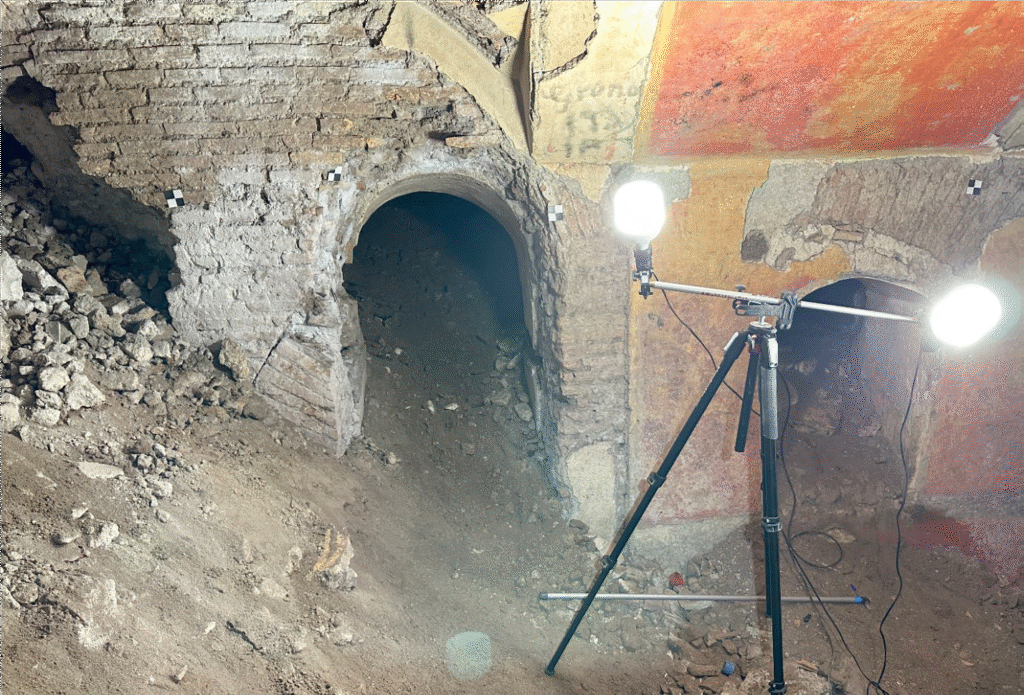
For decades, students at Liceo Cavour in Rome spoke about dark corridors and hidden rooms beneath the school gymnasium. Some even explored these underground spaces and left inscriptions on the walls. What no one knew was that these chambers were part of a luxurious Roman domus dating back approximately 1,800 years, located in one of the most prestigious areas of Ancient Rome.
The discovery, unveiled to the public on May 28, 2026, revealed part of a vast 2nd-century AD residence hidden beneath the school, near the Colosseum.
What Was Beneath the Gymnasium?
After receiving reports from students, history and Latin teacher Claudia Marino informed Rome’s Special Superintendency. Excavations began in January 2026 and confirmed that the underground corridors and chambers belonged to an ancient residence of the Roman elite.
Now known as the Domus Liceo Cavour, the structure is located between the Carinae and the Esquiline Hill, an area that was once home to historical figures such as Cicero, Pompey, and Octavian, the future Emperor Augustus.
What Is a Roman Domus?
A domus was a large private residence owned by the wealthiest families in Roman society. In addition to serving as homes, these residences functioned as public displays of wealth, influence, and social prestige.
The residence discovered beneath the school is an example of this type of construction.
Rooms Preserved for Nearly Two Thousand Years
The archaeological work was not simple. The underground spaces have little ventilation and virtually no natural light, requiring stabilization efforts before exploration could begin.
The greatest surprise was the remarkable state of preservation of the rooms.
Even after nearly two millennia, archaeologists found figurative and floral frescoes, wall paintings, decorative stucco, and mosaics still visible on the walls and even on the vaulted ceilings.
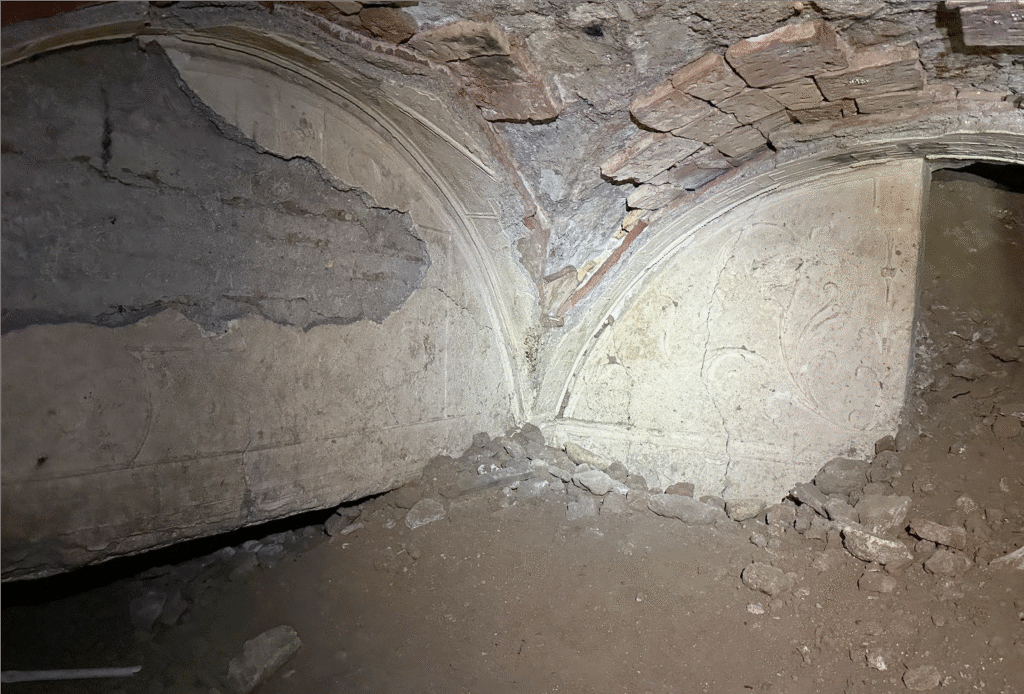
Among the areas already studied is a room featuring a black mosaic made of large irregular tiles, an aesthetic choice favored by the Roman elite of the period. In another section of the residence, a corridor preserves decorations with floral motifs, human figures, and monochromatic stucco.
According to researchers, many of the colors remain surprisingly vibrant.
Why Do the Frescoes Impress Archaeologists?
The significance of these paintings goes beyond their preservation.
During the Roman Imperial period, frescoes and wall paintings were symbols of social status, wealth, and cultural sophistication. Residential decoration played an important role in the social and political life of the elite, serving as a display of prestige for visitors and guests.
For this reason, the exceptional state of preservation of the paintings, stucco, and decorative elements found at the Domus Liceo Cavour provides a rare opportunity to observe how members of Ancient Rome’s most privileged classes lived and presented themselves.
The Names of the Former Residents Emerged From an Unexpected Source
Archaeologists were also able to identify some of the residence’s inhabitants.
The earliest known owners were L. Fabius Gallus and later Umbria Albina. Their names emerged from evidence related to water management, as individuals of high social standing could receive water supplies directly from the Roman public aqueduct system.
100-Year-Old Graffiti Tells Another Story
If the frescoes date back to the 2nd century, the walls also preserve much more recent traces.
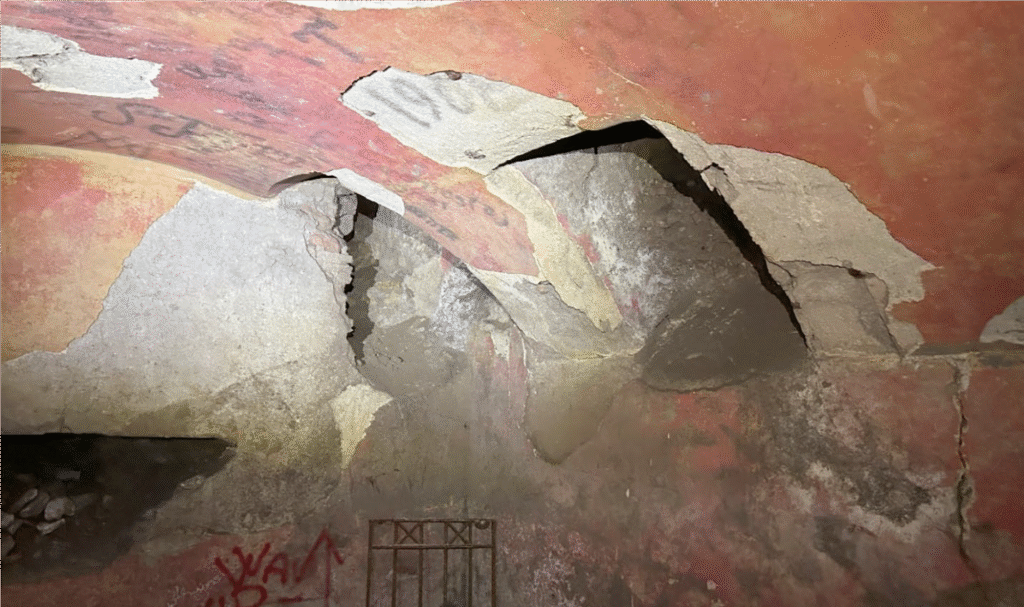
Archaeologists discovered graffiti dating from 1920 to 1950, including names, surnames, dates, and inscriptions left by students, visitors, and underground explorers. Some of these markings were created using cigarette smoke and will now be analyzed by specialists.
The findings indicate that the chambers were known and discreetly visited long before archaeological excavations began.
Interestingly, the graffiti creates a kind of bridge between eras separated by nearly two thousand years: on one side, the residents of Imperial Rome; on the other, 20th-century students and visitors who walked through the same corridors without imagining the site’s true historical significance.
The Discovery May Be Even Larger
So far, only part of the Domus Liceo Cavour has been explored.
According to Rome’s Special Superintendency, the residence extends beneath other areas of the school, including the courtyard. For this reason, archaeologists are advocating for further investigations as soon as funding becomes available.
The ultimate goal is to open the archaeological site to the public and return this fragment of Ancient Rome to the city. Among the possibilities being discussed is a curious solution: in the future, the very students who helped reveal the site may serve as guides for visitors.
Learn more: Cantieri Narranti – Domus Liceo Cavour (official project source).