The Price of Convenience: Why the expansion of facial surveillance demands urgent regulation to protect privacy and democratic freedom.
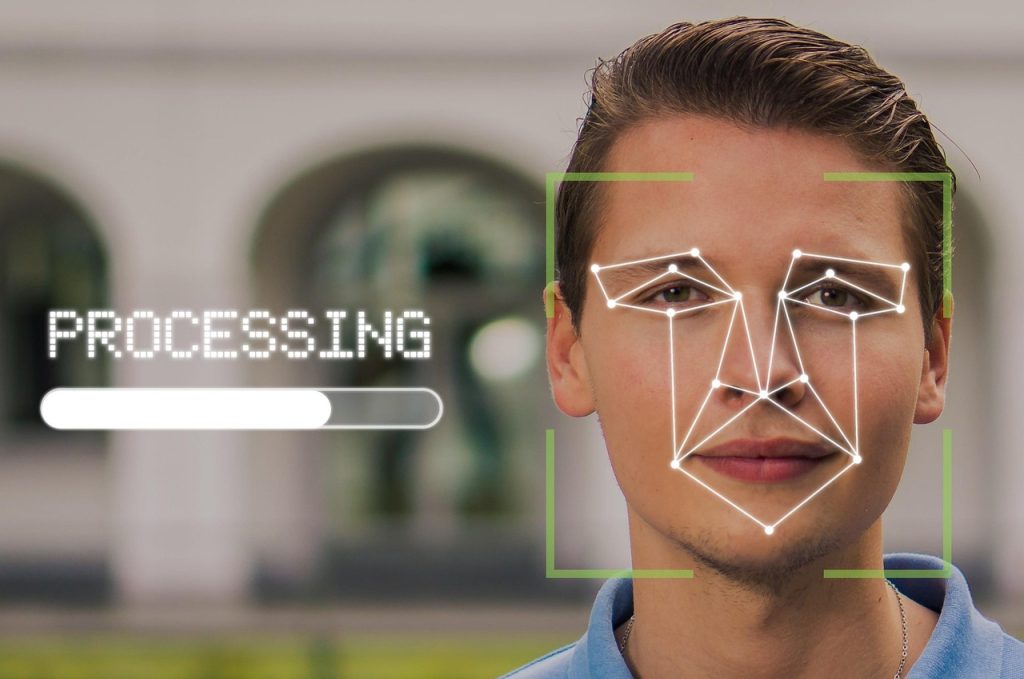
Facial recognition technology has become one of the fastest and most convenient ways to identify people in airports, smartphones, banks, and even public agencies. However, behind this convenience lies a growing global concern: the uncontrolled use of this tool can violate civil rights, deepen inequalities, and enable forms of surveillance previously unthinkable. The United States and Europe are at different stages of this debate — but all face the same dilemma: how to balance security, innovation, and individual freedom.
1. What Facial Recognition Technology Is and Why It Raises Concerns
Facial Recognition Technology (FRT) uses algorithms to identify individuals based on their images. Although efficient in some scenarios, it presents serious flaws when applied without oversight, especially when involving specific ethnic groups.
According to an analysis mentioned in a report by Criminal Legal News, a study by NIST (National Institute of Standards and Technology) showed that Black women are the most affected by misidentification errors, being up to 100 times more likely to experience false positives compared to white men.
Although Black men also show high error rates, Black women remain statistically the most vulnerable group.
The issue is that errors tend to be more severe in algorithms trained mostly on datasets made up of white male faces. Where racial bias and gender bias overlap (non-white women), the error rate increases even more.
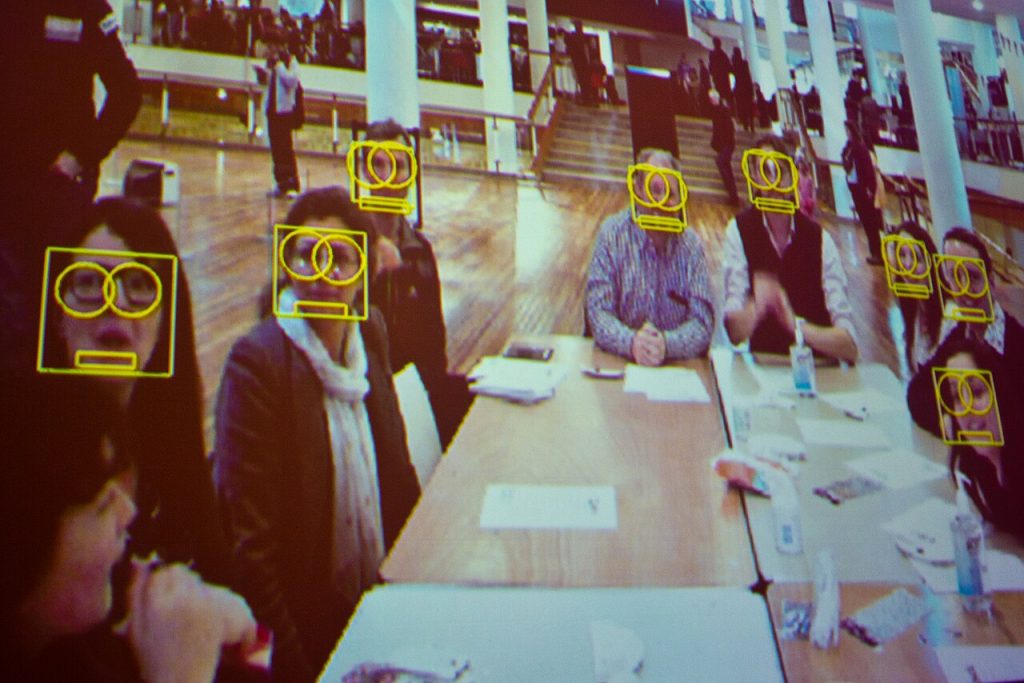
Additionally, biometric surveillance can expand state monitoring, allowing citizens to be tracked in public spaces without knowledge or consent — exactly the type of practice condemned by privacy advocates worldwide.
2. United States: Technological Advances, Minimal Regulation
The U.S. is currently one of the world’s largest testing grounds for facial biometrics. At least 18 federal agencies already use FRT, including the FBI, ICE, TSA, and even the Department of Housing, which has used the technology to justify evictions.
Even so, there is no federal law regulating the use of facial biometrics. The result is a patchwork of isolated decisions, vulnerable to abuse.
Recent reports from Reuters and Criminal Legal News highlight:
- wrongful arrests caused by misidentifications, many involving Black men;
- improper surveillance of citizens without transparency;
- lack of independent audits;
- and the use of massive image databases collected without consent, such as in the case of ClearView AI.
Explaining Who ClearView AI Is
ClearView AI is a company that, according to information currently reported by the company itself, scraped over 60 billion photos from the internet, extracting facial images from social networks, news websites, and public platforms without any user consent.
It then built a massive biometric database and began offering it to federal and state law enforcement agencies in the U.S., as well as private companies.
The company claimed it merely “cataloged public images,” but authorities viewed the practice as a serious privacy violation.
ClearView faced class-action lawsuits and multimillion-dollar fines precisely for operating without controls and without respecting civil rights.
The debate has even reached the aviation sector: while lawmakers try to guarantee that passengers can opt out of TSA facial screening, airlines lobby to expand the use, arguing that restrictions would increase wait times and operational costs.
The chair of the U.S. Commission on Civil Rights, Rochelle Garza, summarized the issue: “unregulated facial recognition technology poses significant risks to civil rights,” as quoted in Criminal Legal News.
3. Europe: The Strictest Region Against Abuse
Europe is moving toward full and effective regulation. The new Artificial Intelligence Act and the General Data Protection Regulation (GDPR) form the most protective legal framework in the world.
In the EU, biometric systems can only operate after proving safety, strict purpose limitations, and robust consent processes. A recent example: Milan’s airport was forced to suspend its Faceboarding system after a data-protection-based decision widely covered by European outlets.
Oversight is so strict that, according to the European Data Protection Board (EDPB):
- ClearView was fined €30.5 million by the Dutch data protection authority,
- regulators ordered the deletion of all images of European citizens,
- and executives may even face personal liability.
Europe demonstrates that innovation can be used without sacrificing democracy, transparency, and fundamental rights.
4. China: Surveillance on an Unprecedented Scale
While the U.S. and EU debate limits, China continues expanding its biometric surveillance networks. Projects such as Skynet and Sharp Eyes rely on more than 700 million cameras across the country.
In Shanghai, authorities are tripling the number of cameras to monitor 50 million citizens.
According to China Development Brief, the Chinese government implemented regulatory measures for facial recognition (effective since June 1, 2025).
The country also launched a digital identity system (Cyberspace ID) in mid-July, linking real-world identity to biometric authentication. Although authorities claim enrollment will not be mandatory, experts and NGOs warn that the system could become widely adopted — or effectively mandatory.
This is the exact scenario the United States and Europe want to avoid at all costs.
Facial recognition technology is powerful and, when properly regulated, can bring efficiency, security, and innovation. But when used without limits, it becomes a tool for persecution, error, and loss of freedoms.