When innovation crosses the line between progress and fatal risk
Throughout history, many inventors risked their lives in the name of progress, personally testing their innovative creations. While many achieved success and recognition, some lost their lives while attempting to demonstrate how their inventions worked. These visionaries are remembered both for their courage and for the lessons they left behind.
7. Henry Winstanley

Henry Winstanley: The Visionary Engineer Who Tested His Own Lighthouse During the Great Storm
Henry Winstanley (1644–1703) was an English engineer, painter, and inventor, best known for building the first Eddystone Lighthouse. The main innovation of this project was that it became the first structure in the world built offshore on rocks submerged at high tide, proving it was possible to signal hidden dangers far from the coast. According to the Encyclopaedia Britannica, after losing two ships on the dangerous Eddystone Rocks, Winstanley decided to build the lighthouse to prevent further disasters.
Born in Saffron Walden, Essex, he was well known for his interest in mechanical and hydraulic devices. Construction began in 1696 and was completed in 1698, using a pioneering anchoring system with iron bars fixed directly into solid rock.
Winstanley expressed a desire to be inside the lighthouse during the strongest possible storm to test its resilience. Tragically, he died in 1703, along with five others, during the Great Storm—one of the most severe storms in English history—while carrying out repairs. The lighthouse collapsed, but his legacy as a pioneer of maritime engineering endures.
6. Horace Hunley
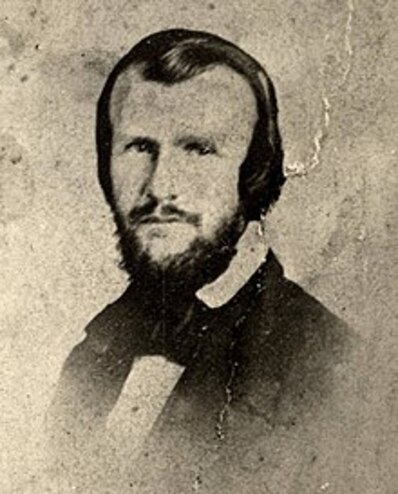
The Tragedy and Triumph of the H.L. Hunley: The Submarine That Changed Naval History
Horace Lawson Hunley (1823–1863) was a naval engineer and inventor of the H.L. Hunley, who repeatedly attempted to develop an effective submarine for the Confederacy during the American Civil War. He financed and helped build three submarines: Pioneer, American Diver, and H.L. Hunley.
On October 15, 1863, Hunley died tragically when the H.L. Hunley sank during a test in Charleston, taking the inventor and its crew of eight men with it. Even after his death, the submarine was raised and recovered.
After being salvaged, the Hunley was returned to service under the command of Lieutenant George Dixon. On February 17, 1864, it made history by becoming the first submarine to sink an enemy warship, the USS Housatonic. Shortly after the successful attack, the submarine mysteriously sank again, killing its entire crew. The Hunley remained lost for 136 years until it was rediscovered and raised on August 8, 2000.
5. William Bullock
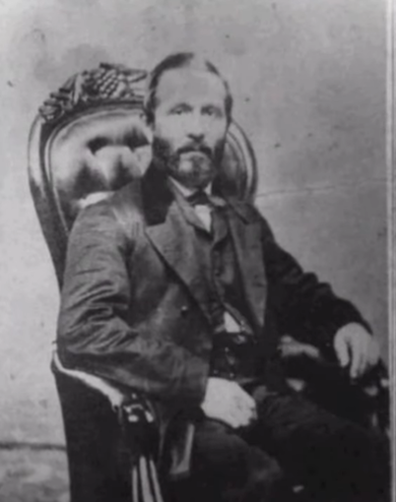
William Bullock: The Inventor Who Revolutionized Printing and Met a Tragic End in a Simple Accident
William Bullock (1813–1867) was an American inventor who revolutionized the printing industry by improving the rotary printing press in 1863. According to the Encyclopaedia Britannica, his main innovation was the continuous-feed rotary press, which used large rolls of paper instead of individual sheets. This technology enabled large-scale printing at unprecedented speed, producing up to 12,000 copies per hour and transforming newspaper distribution worldwide.
The Inventor’s Tragic Fate
In 1867, Bullock met a tragic end. While helping install one of his presses for the Public Ledger newspaper in Philadelphia, he attempted to kick a drive belt into place.
His foot became caught in the mechanism and was crushed by the machine. The severe injury led to gangrene, and William Bullock died days later during an amputation surgery. He is often cited as one of the most classic examples of inventors who became victims of their own creations.
4. Otto Lilienthal
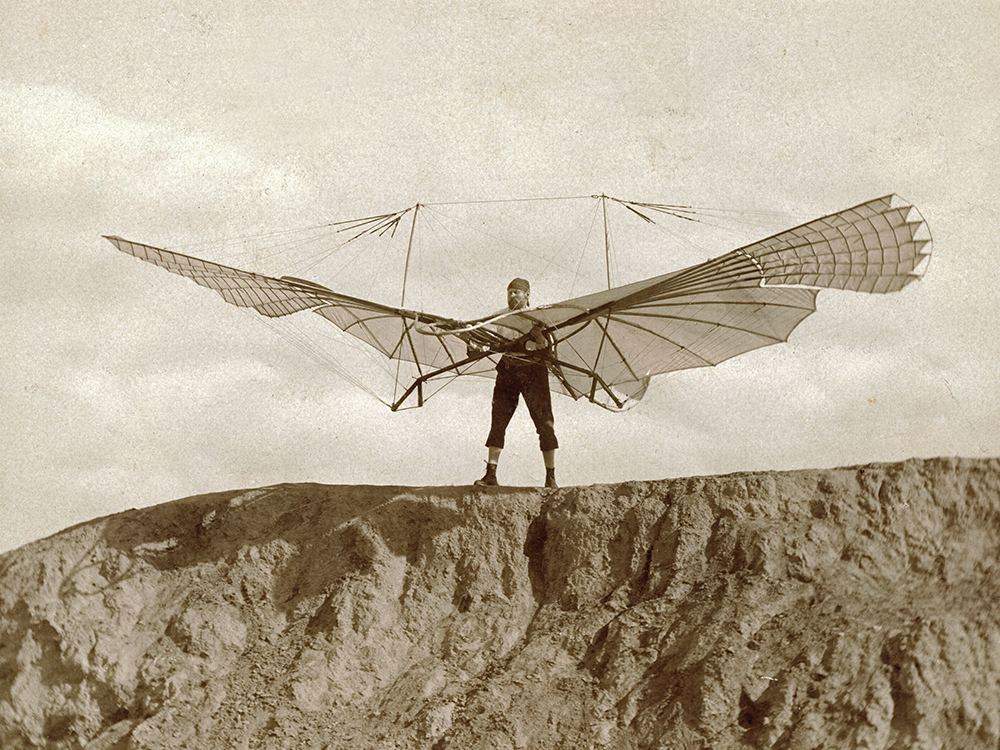
Otto Lilienthal: The King of Gliders and the Price of Innovation
Otto Lilienthal (1848–1896) was a German aviation pioneer who proved that controlled human flight was possible. According to records from the Encyclopaedia Britannica, between 1891 and 1896, he completed more than 2,000 successful flights. His work was so advanced that it directly influenced the Wright brothers, who referred to him as their “most important precursor.”
The Fatal Accident
On August 9, 1896, during a flight over the hills of Rhinow, a sudden gust of wind caused his glider to stall and lose lift. He fell from a height of approximately 15 meters, resulting in a fractured neck.
Legacy and Last Words
Lilienthal died the following day, August 10, in Berlin. His famous last words, recorded by his brother Gustav, were:
“Opfer müssen gebracht werden!” (“Sacrifices must be made.”)
3. Franz Reichelt
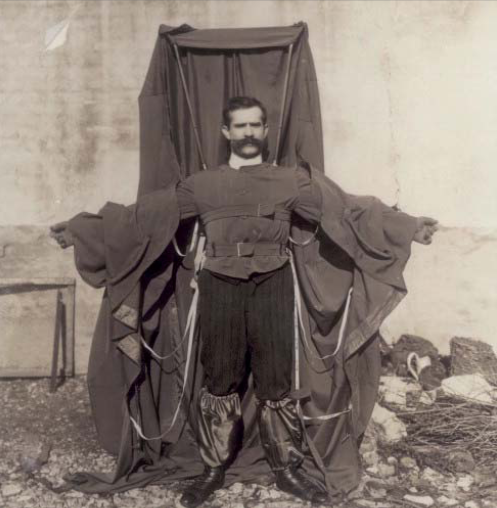
The Dream of the Flying Tailor
Franz Reichelt (1878–1912), known as the “Flying Tailor,” was born in Austria and became notable in the early 20th century for his attempts to create a parachute suit that would allow the wearer to glide safely to the ground. Reichelt conducted several tests, both with mannequins and by jumping himself from lower heights, but all attempts failed. He believed that jumping from a greater height would succeed.
The Fatal Attempt at the Eiffel Tower
He made a fatal attempt by testing his invention himself, jumping from the first platform of the Eiffel Tower, 57 meters above the ground, on February 4, 1912, in front of spectators and film crews. Reichelt had obtained permission from Paris police by claiming he would use test mannequins; instead, he shocked everyone by jumping himself.
The Accident and Aviation Legacy
Reichelt believed his invention could save lives, but when he jumped, the suit folded instead of opening, and he died instantly upon impact. Although his design failed, Reichelt helped draw attention to the urgent need for effective safety devices for aviators, whose mortality rate was extremely high during the early days of aviation. The jump was filmed by contemporary cameramen.
Warning: The following video contains historical footage of a fatal accident that occurred in 1912. Viewer discretion is advised.
2. J.G. Parry-Thomas
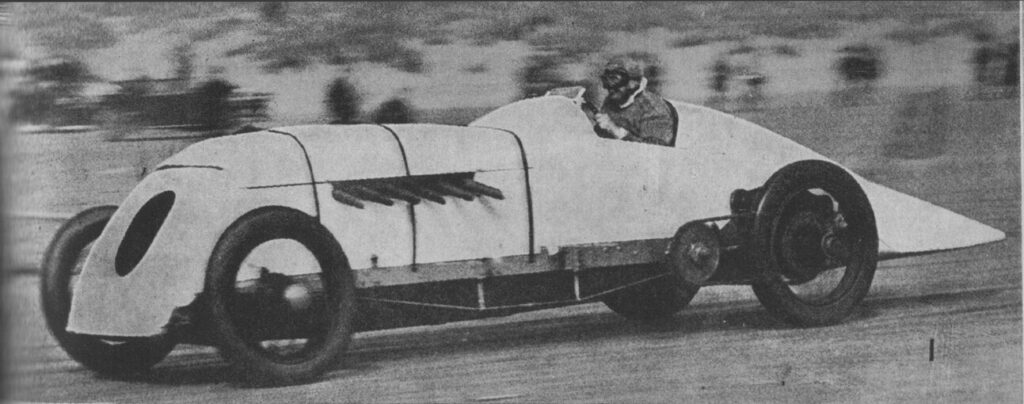
J.G. Parry-Thomas: The Engineer of Speed
John Godfrey Parry-Thomas (1884–1927) was a renowned Welsh engineer and racing driver who dedicated his life to breaking land speed records. On April 27, 1926, he reached 272 km/h (169 mph), setting a new world record. The record stood for less than a year before being broken by Malcolm Campbell in 1927.
The Car “Babs” and the Quest for Speed
To reclaim the title, Parry-Thomas used his car known as “Babs,” a vehicle powered by a V-12 aircraft engine and featuring bold design choices, including exposed drive chains connecting the engine to the wheels. On March 3, 1927, he returned to Pendine Sands, in Wales, for his fatal attempt.
The Tragic Accident and the Mystery of the Chains
During the run, the car crashed at high speed, killing Parry-Thomas instantly. For decades, it was believed that one of the drive chains broke and struck his neck. However, after the car was excavated and analyzed years later, historians suggested that a failure of the right rear wheel caused the crash. Parry-Thomas became the first driver to die during an official land speed record attempt.
The Rescue of a Legend
As an act of mourning, the car “Babs” was buried in the sands of Pendine after the accident. It remained beneath the dunes for 42 years, until it was excavated and restored in 1969. Today, the car is displayed at the Museum of Speed in Wales as a tribute to Parry-Thomas’s courage and innovation.
1. Marie Curie
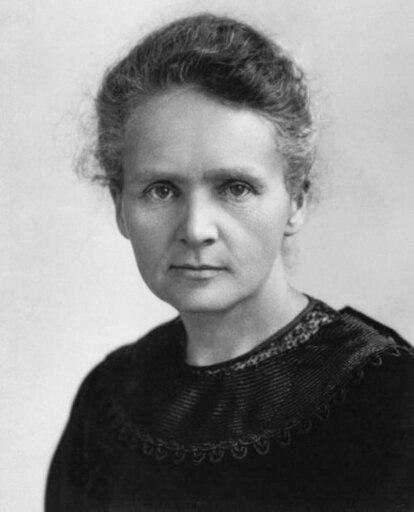
The Groundbreaking Discoveries of Marie Curie
Marie Curie (1867–1934) was a renowned Franco-Polish physicist and chemist. According to the Encyclopaedia Britannica, she pioneered the study of radioactivity, a term she coined herself. Alongside her husband Pierre Curie, she discovered the elements polonium and radium in 1898, revolutionizing science. In 1903, she became the first woman to win a Nobel Prize, receiving the Nobel Prize in Physics with Pierre Curie and Henri Becquerel. In 1911, she won the Nobel Prize in Chemistry, becoming the only person in history to receive two Nobel Prizes in different scientific fields.
During World War I, Marie Curie also developed mobile X-ray units, known as “Petites Curies,” to help battlefield surgeons locate bullets and shrapnel in wounded soldiers.
The Consequences of Radiation Exposure
Her prolonged exposure to ionizing radiation—at a time when its dangers were not yet understood—led to the development of a fatal illness. She carried test tubes containing radioactive isotopes in her pockets and stored them in her desk drawer, often commenting on the beautiful blue-green glow they emitted in the dark. Marie Curie died in 1934 from aplastic anemia, a condition caused by radiation exposure. Her work laid the foundation for radiation therapy and the use of radioactivity in modern nuclear medicine.
Additional Story: The Inventor Who Sought Eternal Youth
Alexander Bogdanov
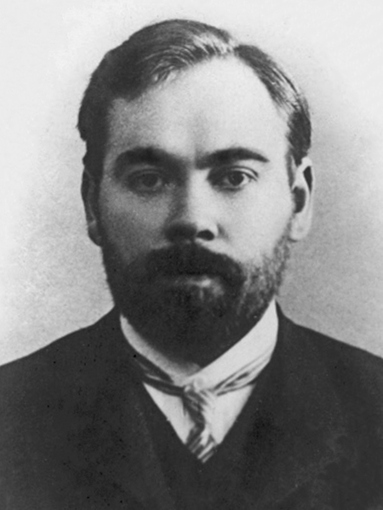
Alexander Bogdanov (1873–1928) was a Russian physician, philosopher, socialist revolutionary, and a pioneer of science fiction. According to the New World Encyclopedia, Bogdanov was an early researcher in blood transfusion, believing it could rejuvenate the human body.
Between 1924 and 1926, he conducted experiments on himself and other volunteers, including Maria Ulyanova, Lenin’s sister. Bogdanov believed transfusions could improve health and slow aging.
However, he died in 1928 after receiving blood from a student who was infected with malaria and tuberculosis. Others attribute his death to blood incompatibility, a concept still poorly understood at the time.
Research Sources
The information in this article is based on reputable reference works and historical sources listed below.