High-tech innovation and public engagement join forces to contain one of the largest biological invasions in history
🔍 What You Need to Know
- High-tech decoys: Scientists have developed solar-powered robot rabbits that simulate the heat, scent, and presence of a live animal, notifying agents in real time to capture pythons in hard-to-reach marshlands.
- Invasion unleashed by a hurricane: The crisis exploded in 1992 when Hurricane Andrew destroyed exotic breeding facilities and released hundreds of snakes. Today, this “unwelcome legacy” accounts for up to 300,000 Burmese pythons in Florida.
- Mass devastation and rapid breeding: A single female can lay up to 100 eggs per year, and the impact is terrifying: in just 15 years, the snake boom wiped out nearly 99% of the native raccoons and opossums in the Everglades.
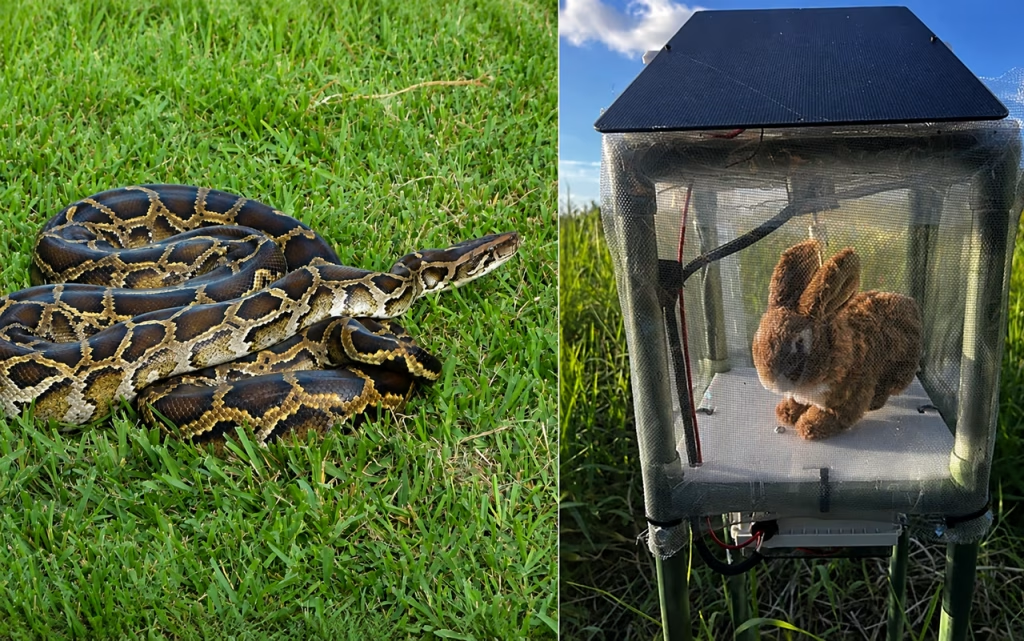
The battle to save the Everglades just got an unprecedented technological boost. Florida scientists have developed robot rabbits as their latest weapon against the overwhelming invasion of Burmese pythons.
These electronic decoys mimic real prey to attract and capture the snakes that are devastating the state’s native wildlife.
How the Robot Rabbits Work
The robotic rabbits simulate perfect prey to trick the pythons’ hunting instinct. Developed by the South Florida Water Management District in partnership with the University of Florida, these devices combine cutting-edge technology with solar power.
- Thermal Signature and Artificial Scent: Since pythons hunt by heat and smell, the robots emit thermal and scent signals identical to those of a live rabbit.
- Real-Time Alerts: Equipped with sensors and cameras, the decoys detect an approaching snake and immediately notify removal agents.
- Access to Inhospitable Areas: The robots are strategically placed in dense swamp locations where human access is nearly impossible.
The Origin of the Invasion: Hurricane Andrew’s Legacy
Burmese pythons don’t belong to Florida’s ecosystem. Native to Asia, they first arrived in the 1970s through the illegal exotic pet trade and abandonment by irresponsible owners.
The true turning point came on August 23, 1992. That’s when the devastating Hurricane Andrew — a Category 5 storm with winds exceeding 240 km/h (150 mph) — slammed into the coast near Miami. The storm tore roofs off homes and destroyed exotic animal breeding facilities, releasing hundreds of pythons into the wild.
Three decades later, the pythons have become Hurricane Andrew’s most lasting — and unwelcome — legacy. With no natural predators in the subtropical ecosystem, the species found the perfect conditions to multiply. Today, an estimated 100,000 to 300,000 pythons are spread across the region.
The Devastating Impact on the Everglades
Everglades National Park spans roughly 734 square miles (about 1,900 km²) and is home to unique biodiversity. Considered North America’s most important nesting ground for wading birds, this ecosystem faces a constant threat of ecological collapse.
Data from the U.S. Geological Survey (USGS) paints an alarming picture. In studies conducted between 1997 and 2012, scientists recorded steep declines in native mammal populations:
- Raccoons: a drastic drop of 99.3%
- Opossums: a collapse of 98.9%
- Bobcats: a significant decline of 87.5%
The python boom is disrupting the entire local food chain. According to the Florida Fish and Wildlife Conservation Commission (FWC), the disappearance of these small mammals is cutting off the food supply for native predators like the Florida panther and birds of prey.
The Burmese Python: A Giant, Prolific Species
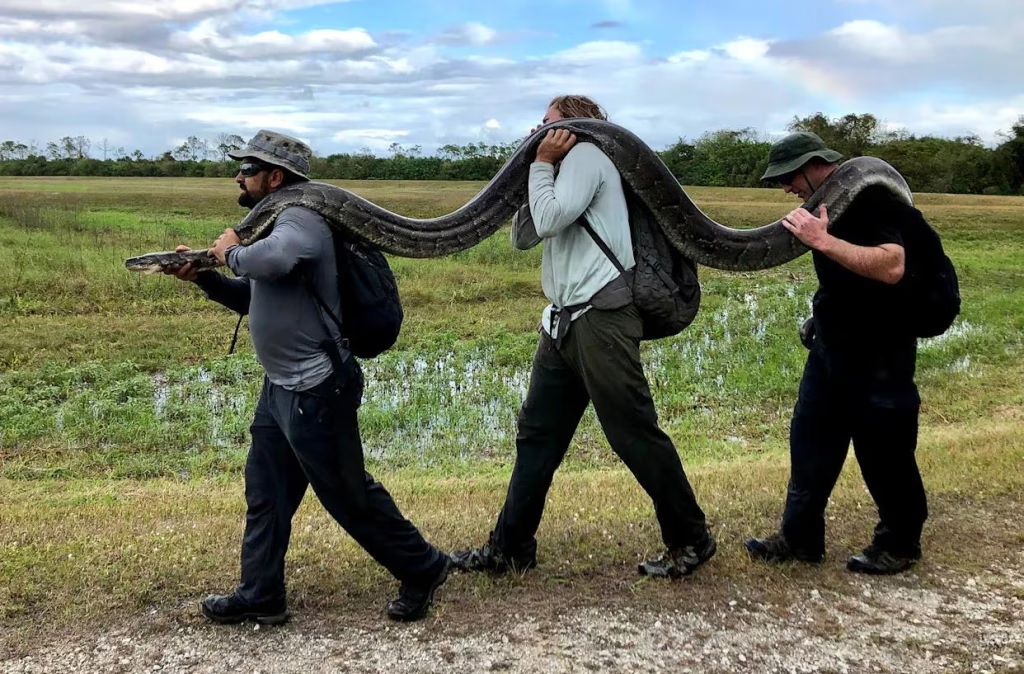
The pythons’ sheer size and reproductive capacity explain the severity of the crisis. An adult Burmese python can grow to about 6 meters (20 feet) long, weigh up to roughly 90 kilograms (200 pounds), and live for up to 25 years.
Their reproduction rate stuns biologists. A single female can lay between 50 and 100 eggs per year. Once fully grown, these massive snakes can swallow prey as large as a full-grown deer, making it nearly impossible to contain their spread using traditional methods alone.
The Annual Python Challenge: 2025 and 2026 Competitions
To fight the infestation, Florida is betting on a combination of technology and community involvement. The Florida Python Challenge is a 10-day annual competition organized by the FWC and the Water Management District.
- Record Results in 2025: The 2025 edition set historic records, removing 294 Burmese pythons. The event drew 934 participants from 30 U.S. states and Canada.
- A Strong 2026 Edition: Held from July 10 to 19, with a $10,000 grand prize and a bonus reward for the longest snake caught. Official results have yet to be announced.
The hunt’s rules demand rigor and respect for animal welfare. All competitors must complete mandatory training and use humane euthanasia methods. Firearms are strictly prohibited during the competition.
Tradition and Technology, Working Together
The robot rabbits are here to reinforce the hunters’ efforts, not replace them. Experts agree that fully eradicating an invasive species established for decades is practically impossible.
Combining technological innovation with human action is the Everglades’ best hope. The partnership between smart sensors and volunteer efforts aims to protect what remains of the ecosystem — and prevent an even greater ecological disaster.
Sources & References
- SFWMD: Using Robotic Rabbits to Remove Invasive Pythons — https://www.sfwmd.gov/news-events/news/dyk-using-robotic-rabbits-remove-invasive-pythons
- CBS News: The Unwelcome Legacy of Hurricane Andrew — https://www.cbsnews.com/news/burmese-python-invasive-species-in-florida-hurricane-andrew-legacy-cbsn-originals/
- Popular Science: Florida Python Challenge 2026 — https://www.popsci.com/environment/florida-python-challenge-2026/
- USGS: How Invasive Pythons Impact Ecosystems — https://www.usgs.gov/faqs/how-have-invasive-pythons-impacted-florida-ecosystems
- National Geographic: Burmese Python Profile — https://www.nationalgeographic.com/animals/reptiles/facts/burmese-python
- SFWMD: 2026 Florida Python Challenge™ Registration — https://www.sfwmd.gov/news-events/news/2026-florida-python-challengetm-dates-and-registration-now-open
- Florida Python Challenge®: Official Rules & Registration — https://flpythonchallenge.org/participate/competition/