Phones that would have been discarded are now powering local data centers in an affordable and environmentally friendly way.
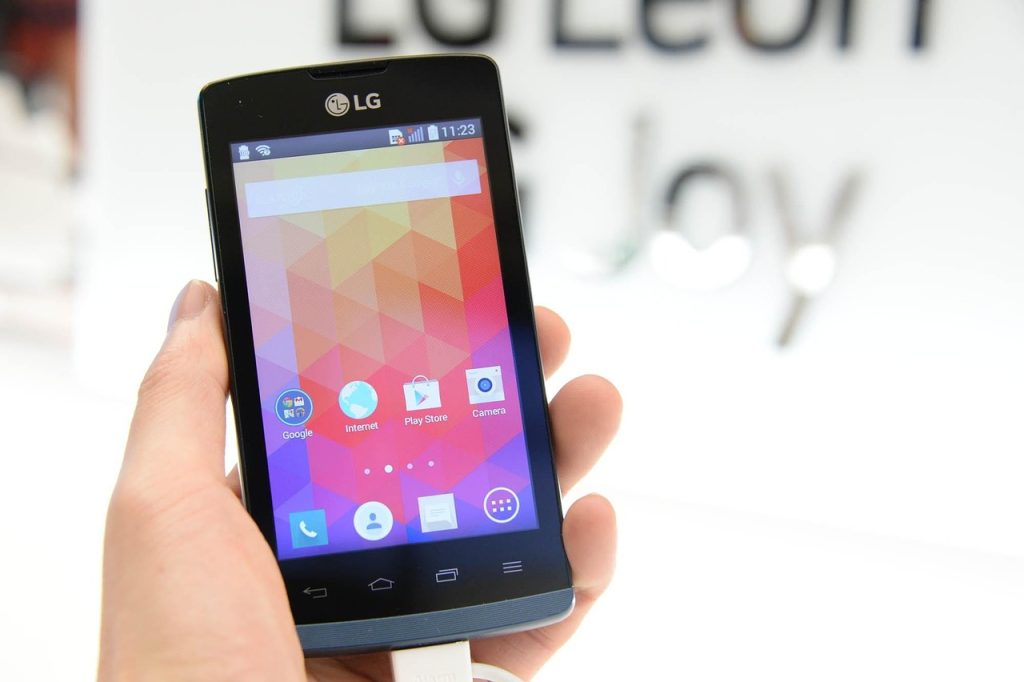
What You Need to Know:
- Hidden power in your pocket: Smartphones from just three years ago can outperform expensive enterprise servers in certain single-core computing tasks.
- Even on Mars: This bold recycling strategy isn’t just a theory. NASA itself used an older smartphone chip—the same Qualcomm Snapdragon 801 found in the Samsung Galaxy S5—to help the Ingenuity helicopter navigate during its flights on the Red Planet.
- Only the motherboard is reused: Researchers remove and discard the screens, batteries, cameras, speakers, and outer casings of old smartphones. They keep only the motherboard, which houses the system-on-chip (SoC) responsible for all computing tasks, running a Linux distribution optimized for data center workloads.
Researchers at the University of California, San Diego (UC San Diego), in partnership with Google, have developed an innovative way to repurpose retired Pixel smartphones by turning them into low-cost, low-carbon data centers.
Instead of throwing the devices away, the project gives them a second life as computing platforms, helping reduce electronic waste and the environmental impact of manufacturing new hardware.
Why Does Reusing Smartphones Make Sense?
The average smartphone is replaced every four years, making frequent upgrades one of the biggest contributors to the world’s growing e-waste problem. Even after three years of use, many smartphones still deliver better single-core performance than expensive traditional servers, such as the Asus RS720A-E11 equipped with AMD EPYC processors and Nvidia GPUs.
Google highlights the concept of embodied carbon—the greenhouse gas emissions generated during the manufacturing of new devices. Reusing existing hardware significantly reduces this environmental footprint.
How Are the Phones Repurposed?
The process is both simple and efficient:
- Unnecessary components—including the display, battery, cameras, speakers, and outer casing—are removed.
- Only the motherboard, which contains the system-on-chip (SoC), is retained.
- Android is replaced with a Linux distribution optimized for data center workloads.
- Orchestration software such as Kubernetes is installed.
Testing showed that 25 to 50 retired smartphones can deliver computing power comparable to a dual-socket server CPU.
Real-World Applications and Cost Savings
A cluster of just 20 smartphones can run the applications required for a class of more than 75 students. With 2,000 smartphones, UC San Diego plans to build a local data center capable of supporting 100 classes simultaneously.
Instead of relying on cloud services—which come with higher operating costs—the university can run workloads locally. According to the research team, the total cost is only a fraction of purchasing a new server, providing significant savings at a time when processors, memory, and storage continue to become more expensive.
Comparison: Repurposed Smartphone Cluster vs. Traditional Server
| Criteria | Repurposed Smartphone Cluster | Traditional Server (e.g., Asus RS720A-E11) | Key Advantage |
|---|---|---|---|
| Cost | Only a fraction of the price of a new server | High upfront hardware cost | Significant cost savings |
| Single-core performance | Higher than many modern servers | Lower in single-core workloads | Better for single-threaded tasks |
| Hardware required | 25–50 smartphones equal one comparable server | One server | Flexible scalability |
| Environmental impact | Reduces embodied carbon and electronic waste | High manufacturing footprint | Much smaller carbon footprint |
| Practical capacity | A 20-phone cluster supports a class of 75+ students | Designed for heavy enterprise workloads | Ideal for education and lightweight computing |
| Best use cases | Education, research, edge computing, and localized data processing | Large-scale data centers and AI model training | Optimized for smaller workloads |
Limitations and Future Potential
The researchers emphasize that these smartphone clusters are not intended to replace large AI data centers, which rely on specialized GPUs to train models such as ChatGPT or Gemini. Instead, they are well suited for lighter computing workloads, including:
- Educational research
- Automated grading
- Edge computing projects
- Localized data processing
Earlier research at the University of Tartu also demonstrated that small data centers can be built using retired smartphones for roughly €8 per device, with applications including environmental monitoring and real-time data collection.
Space Technology Powered by Recycled Smartphone Chips
According to WIRED magazine and official NASA documents, the Ingenuity Mars helicopter used a Qualcomm Snapdragon 801 processor—the same chip found in 2014 smartphones such as the Samsung Galaxy S5 and LG G3—to process camera images and calculate its position during flights over Mars, performing a role similar to that of a navigation system without relying on GPS.
Project Launch and What’s Next
The research team plans to release the complete system later in 2026 (during the Northern Hemisphere’s fall) and continues to evaluate how well consumer-grade components withstand continuous data center operation.
Known as phone cluster computing, the project demonstrates that the smartest technological solution is not always buying newer, more powerful hardware—it can also mean making better use of the devices we already have.
Sources and References
- Google Research: A low-carbon computing platform from your retired phones – Project details on the low-carbon computing platform built from retired Pixel devices.
- Tom’s Hardware: Researchers recycle old phones and cluster them into computing platforms – Technical analysis comparing smartphone single-core performance with multicore servers.
- University of Tartu: University of Tartu researchers have found a way to give old smartphones a new life – Data regarding previous low-cost smartphone cluster experiments.
- WIRED: El Ingenuity de la NASA: cómo un procesador de teléfono de 2014 logró lo impensable en Marte – Coverage on the use of recycled consumer-grade chips in space exploration.
- NASA (NTRS): Ingenuity Mars Helicopter Flight Software and Avionics Architecture – Official technical paper detailing the hardware and processor setup used on Mars.