Ancestral Tattoos Revealed Through Laser Technology
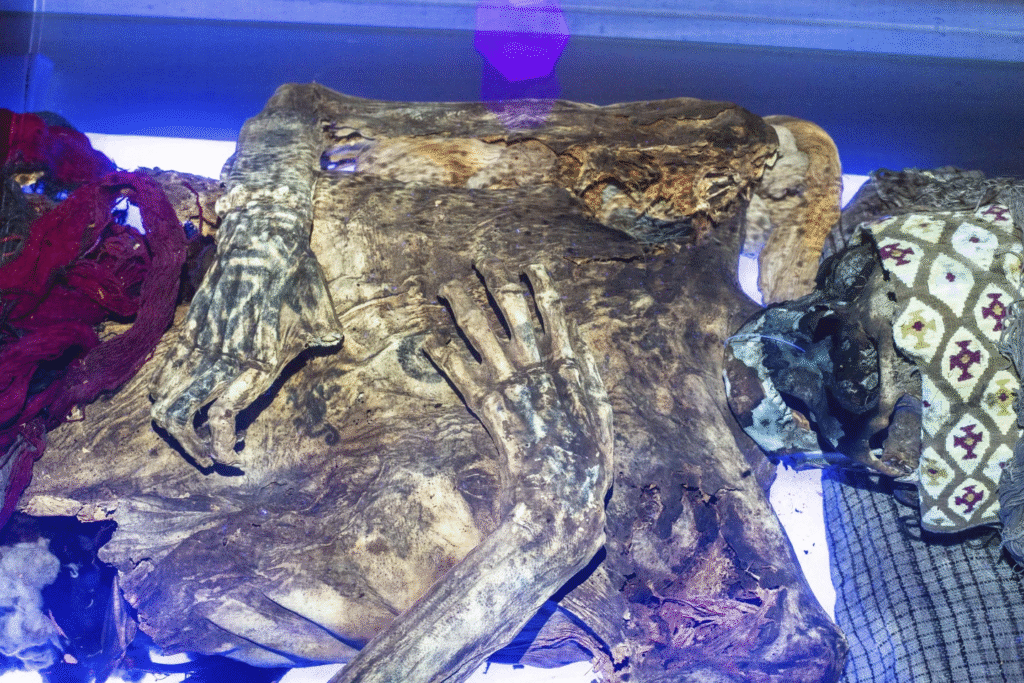
Researchers have uncovered intricate tattoo designs on mummies from the Chancay culture, which flourished along Peru’s central coast between 900 and 1500 A.D., before the rise of the Inca Empire and the arrival of Europeans. This discovery highlights the cultural, artistic, and religious sophistication of this civilization.
The Technology Behind the Discovery
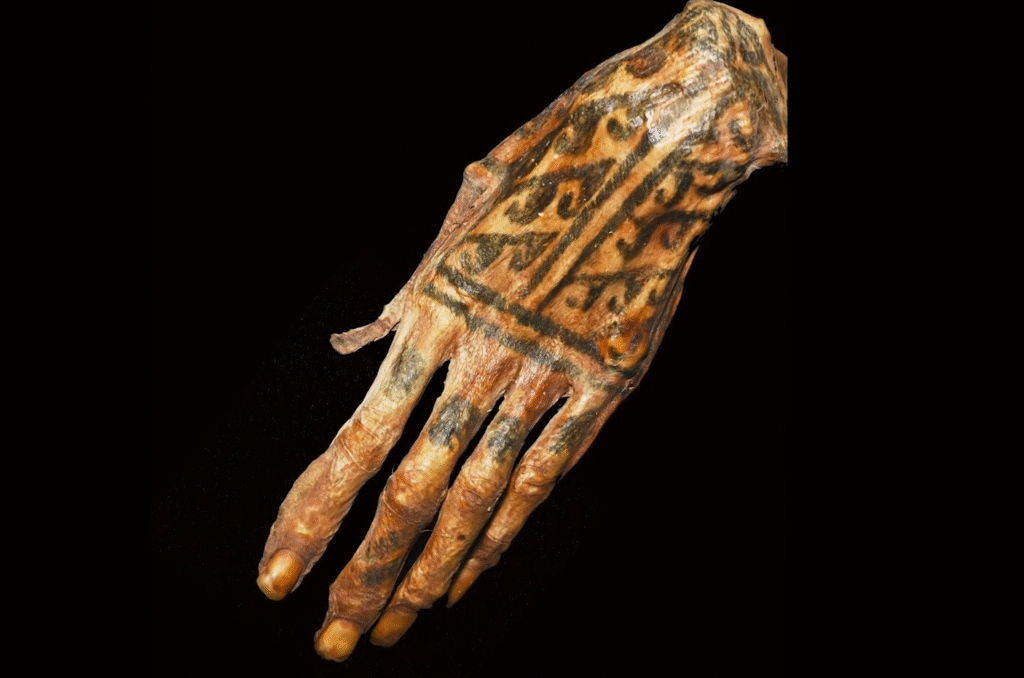
The technique used, known as Laser-Stimulated Fluorescence, causes mummified skin to emit a faint glow, allowing researchers to distinguish the contrast between the black tattoo ink and the skin. This revealed highly complex geometric patterns, such as triangles and diamonds, with extremely fine lines measuring only 0.1 to 0.2 millimeters thick.
Mummies with Exceptional Body Art
The study analyzed about 100 Chancay mummies, all bearing tattoos on different parts of the body, including hands, fingers, and forearms. Four mummies stood out, displaying tattoos of exceptional quality that point to an advanced level of technical skill. According to Aaron Deter-Wolf, an archaeologist specializing in pre-Columbian tattoos, these works show “a quality comparable to the best modern electric tattoos.”
A Global Historical Perspective
The oldest known tattoos were found on the remains of a Neolithic man who lived in the Italian Alps around 3000 B.C. Mummies from ancient Egypt and other cultures worldwide also display tattoos, demonstrating the universality of this practice throughout history.
In ancient societies, tattoos often expressed cultural identity, signaled social status, played roles in religious rituals, honored deities, offered protection from evil spirits, commemorated the dead, and symbolized significant life events.
However, not all cultures embraced this tradition. For example, in ancient China, tattoos were often associated with criminals and considered a social stigma. Similarly, in ancient Jewish culture, tattoos were prohibited by the Torah.
Scientific Impact and Publication
The research was published in the Proceedings of the National Academy of Sciences and represents a major step forward in understanding the cultural, social, and religious practices of tattooing. This discovery shows how modern technology can reveal hidden details and help preserve the legacy of past civilizations.