Accelerating the Future: How Uber’s Partnership in Abu Dhabi Positions the Middle East at the Forefront of Autonomous Vehicle Technology
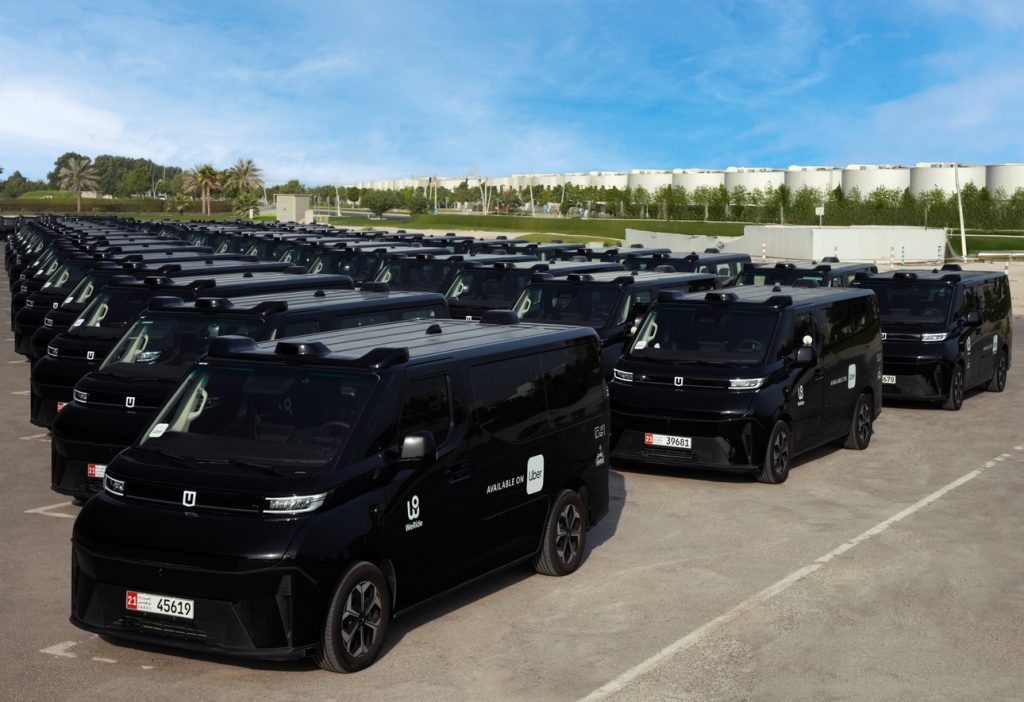
Uber has taken a historic step by officially launching, on November 26, its first fully autonomous rides in Abu Dhabi, in partnership with China’s WeRide. With this milestone, the company solidifies its position as the global leader advancing the fastest in autonomous mobility. This marks the first commercial driverless robotaxi service in the Middle East, expanding Uber’s international presence in autonomous vehicle operations, previously limited to the United States.
Uber: The Global Platform Defining the Robotaxi Era
In recent years, Uber has been building the world’s most comprehensive autonomous mobility ecosystem. Over the past two years, it has partnered with 20 autonomous vehicle technology companies across Europe, the United States, and the Middle East.
Operations in Abu Dhabi reinforce Uber’s strategy to become a universal platform for autonomous vehicles, offering robotic rides powered by different manufacturers and technologies.
This launch follows Uber’s similar services in Austin, Atlanta, and Phoenix, in partnership with Waymo, showing that the company is accelerating the adoption of robotaxis in strategic markets.
WeRide: The Technological Force Behind Full Autonomy
Chinese partner WeRide is one of the world’s leaders in autonomous driving and the first publicly traded robotaxi company. Before going fully driverless, Uber and WeRide began operations in December 2024 with human safety drivers — an essential step to validate the technology and ensure the highest safety standards before the shift to full autonomy.
WeRide already operates fully autonomous robotaxis in Beijing and Guangzhou, and expanding into the UAE reinforces its rapid global growth. In Abu Dhabi, the vehicles run without a human specialist on board, operating at Level 4 autonomy, capable of performing all driving tasks independently within authorized zones.
The robotaxis are GXR models based on Geely’s Farizon SuperVan, with capacity for up to five passengers. Equipped with 20+ sensors and cameras, they can detect obstacles, map routes, and respond automatically to complex traffic scenarios, ensuring safe and efficient operation.
How the Service Works in Abu Dhabi
The Uber–WeRide robotaxi service is initially available on Yas Island, a 31 km² area that hosts the Abu Dhabi Formula 1 circuit.
Passengers selecting UberX or Uber Comfort may be matched with a fully autonomous vehicle. To increase the likelihood, users can select the “Autonomous” option.
The robotaxis feature three layers of safety:
- remote teleoperation,
- an automatic safe-stop protocol,
- and manual takeover capability by authorized technicians.
This ensures that even without a driver on board, indirect human supervision is always present — a key requirement for Level 4 operations.
According to Uber’s official website, the service operates in partnership with Tawasul Transport, and the launch was made possible after WeRide received the UAE’s first federal license for driverless robotaxi operations.
Expansion plans are already outlined: Al Reem, Al Maryah, and additional central areas of Abu Dhabi will be added by the end of 2025.
Lyft: The Direct Competitor Also Advancing with Robotaxis
In the competitive landscape, Lyft — Uber’s main rival in North America — is also investing aggressively in autonomous vehicle technology.
In September 2025, Lyft partnered with Waymo, Alphabet’s autonomous driving company, to launch robotaxi services in Nashville starting in 2026.
Like Uber, Lyft is targeting Level 4 autonomous technology, with fully autonomous vehicles available through its app.
International Expansion and Next Steps
Uber and WeRide plan to expand the service to 15 cities across the Middle East and Europe within the next five years, including future operations in Dubai.
WeRide already maintains over 100 robotaxis in the Middle East, aiming to scale to thousands, establishing the region as a global hub for autonomous mobility.
According to Sarfraz Maredia, Uber’s global head of autonomous mobility:
“the fully autonomous launch in Abu Dhabi is the first deployment of a driverless vehicle outside the U.S. or China.”
With this achievement, Uber strengthens its role as the world leader in autonomous transportation platforms, while WeRide consolidates its position as a technological powerhouse, and Lyft races forward to avoid being left out of this revolution.
The Middle East, now part of this expanding ecosystem, is expected to become one of the most innovative regions on the planet in smart mobility.