A team of archaeologists has made an astonishing discovery in southern Mexico that is helping to uncover an important part of the ancestral heritage of the Zapotec civilization. Beneath the Church of San Pablo Apóstol, located in the town of Mitla, researchers identified a complex network of tunnels and underground chambers. These structures date back to the pre-Hispanic period and reinforce long-held local beliefs that the site was the center of the Zapotec death cult.
Mitla: the ancient gateway to the underworld
Historically, Mitla was one of the most important religious centers of the Zapotecs. According to their beliefs, the city was home to the entrance of the underworld, a sacred place where ancestors were venerated through rituals connected to life after death.
However, after the Spanish colonization, the conquistadors tried to erase these traditions by building a Catholic church over the ruins of the indigenous temple. Despite this attempt at cultural replacement, stories and legends endured, fueling suspicions about what might be buried beneath the church.
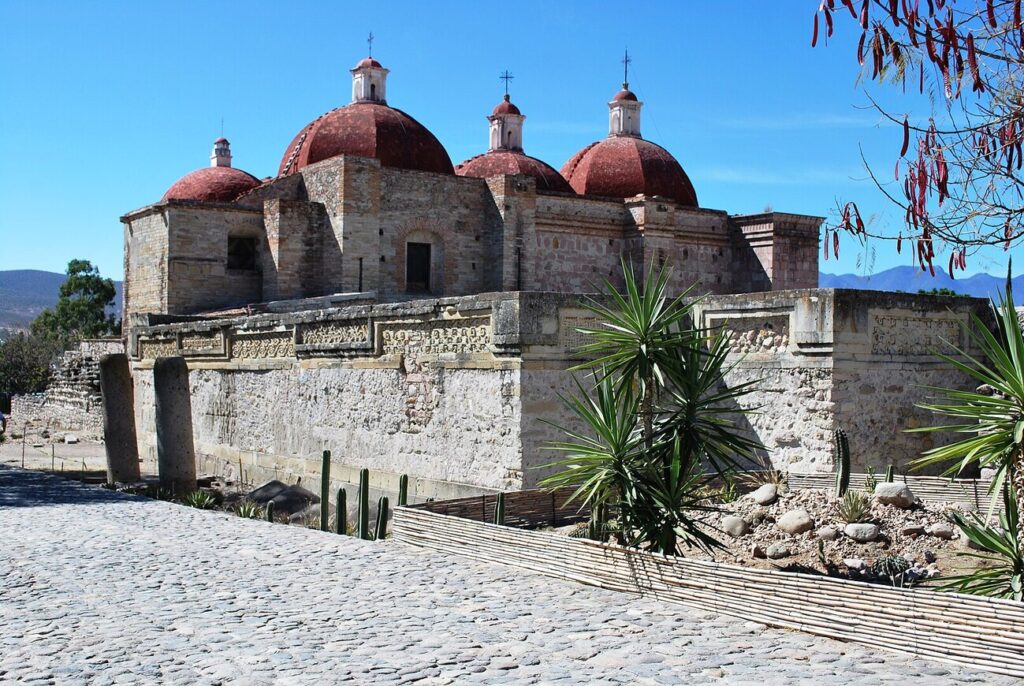
These suspicions led to the creation of the Lyobaa Project, an archaeological expedition launched in 2022 to investigate the origins and depth of the local traditions.
The myth of the “backdoor to hell”
Part of Mitla’s mystery stems from colonial-era writings. A priest at the time claimed that beneath the city lay the “backdoor to hell.” He described enormous caves believed to be the gateway to the Zapotec underworld.
With the new findings, this hypothesis gains renewed weight. Archaeologists now believe the tunnels are directly linked to the Zapotec cult of the underworld, known as Lyobaa, and to Pitao Bezelao, the Zapotec god of death.
Technology in service of archaeology
To carry out the research without damaging the church’s structure, the Lyobaa Project team relied on cutting-edge, non-invasive technology, including:
- Ground-penetrating radar
- Electrical resistivity tomography
- Seismic noise tomography
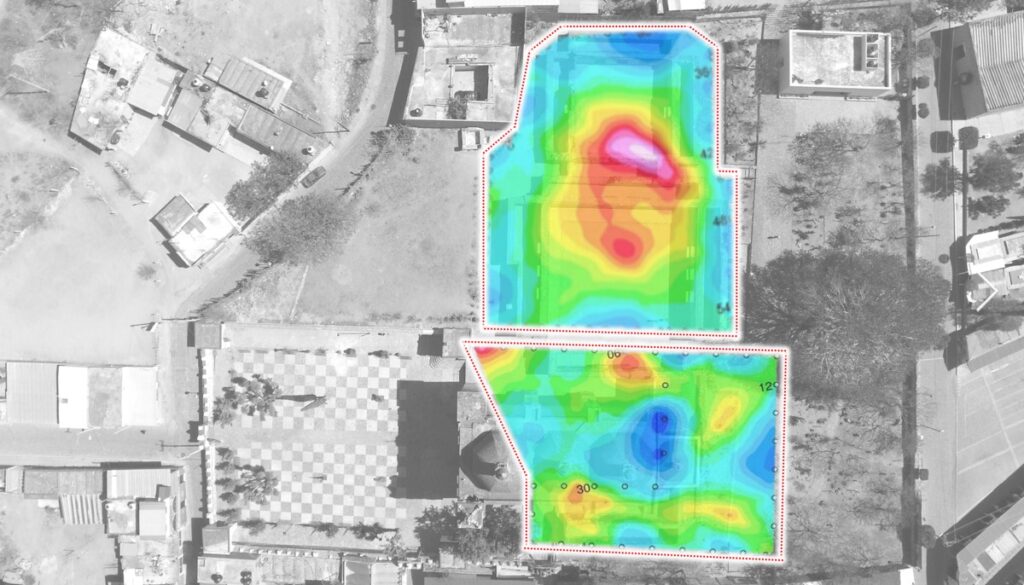
These methods allowed them to map interconnected underground structures, revealing chambers and tunnels reaching depths of up to 30 meters. One of the main chambers identified measures 15 meters long by 10 meters wide, located directly beneath the church’s altar.
Echoes of the past: ancient accounts now confirmed
The discoveries align with 17th-century descriptions by historian Francisco de Burgoa, who in 1674 reported the existence of a vast underground labyrinth in Mitla. According to him, the chambers housed the tombs of Zapotec kings and priests, linked by passages stretching up to 30 leagues (about 165 km), supported by pillars and adorned with sacred symbols.
Long regarded with skepticism, these accounts now appear to contain more truth than once imagined.
An even larger network?
Archaeologist Marco Vigato, founder of the ARX Project, emphasized that the true extent of the subterranean structures remains unknown. Evidence suggests the tunnels may extend beyond the church, opening the door to further—and possibly deeper—discoveries in the coming years.
The future of excavations
The Lyobaa Project team is already planning the next phases of exploration. As more of the underground network is revealed, researchers expect to gain greater insight into Zapotec rituals and their view of death and the afterlife.
What was once dismissed as mere colonial legend has now become one of the most fascinating archaeological finds in recent years. These discoveries shed new light on religion, spirituality, and power among the ancient inhabitants of Oaxaca, Mexico.
Cover image: Church of San Pablo, Mitla – Photo by Moody 75, via Wikimedia Commons