A Milestone in the Energy Transition
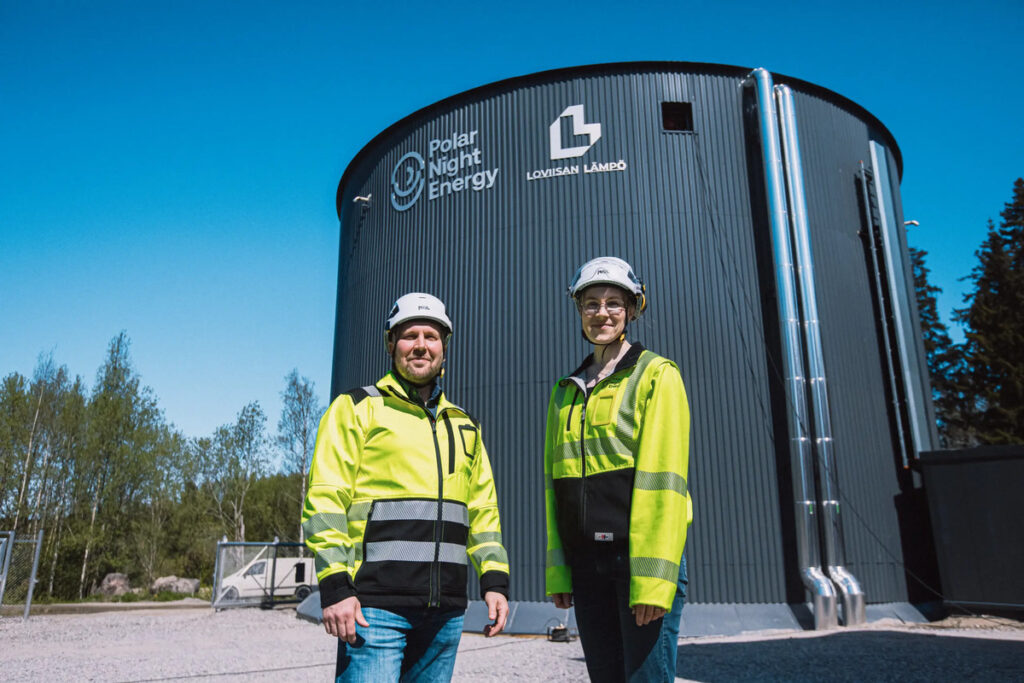
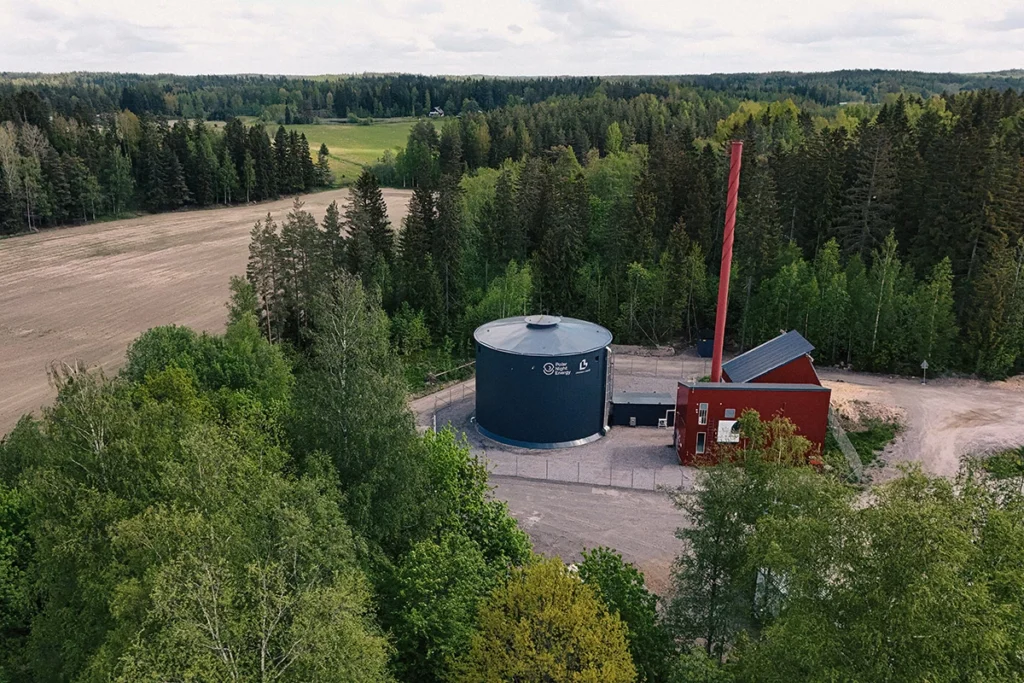
Since June 2025, Finland has been operating the world’s largest sand battery, located in the city of Pornainen, in the south of the country. The 13-meter-high and 15-meter-wide structure was developed by Polar Night Energy, the same startup behind the world’s first commercial sand battery, installed in 2022 in Kankaanpää, shortly after Russia cut gas supplies when Finland refused to pay in rubles following sanctions over the Ukraine invasion.
The new system was designed to take over district heating, reducing wood chip consumption by 60% and nearly eliminating the use of expensive oil that currently powers the city’s district heating network. As a result, local carbon emissions are expected to be reduced by up to 70%.
Dimensions, Capacity, and Efficiency
The battery uses about 2,000 tons of crushed soapstone as its thermal storage medium—a sustainable and abundant material that was once a byproduct of Finland’s fireplace industry. With this technology, the facility can store 100 MWh of thermal energy, enough to cover one week of heating in winter or nearly a month in summer.
The system’s efficiency is remarkable: only 10% to 15% of heat is lost between charging and recovery, and the heated air can reach up to 400 °C. Its capacity is 10 times larger than Polar Night Energy’s first commercial sand battery.
How the System Works
The process is simple but highly effective. When there is excess renewable energy—mainly solar and wind—it is used to heat the sand through resistive heating, reaching temperatures close to 600 °C. The sand retains this heat for weeks or even months.
When heat is needed, cold air flows through the structure, absorbing energy from the sand and reaching up to 400 °C. This hot air is then transferred to heat water in district systems or generate steam for industrial processes. Although the battery does not yet produce electricity directly, Polar Night Energy is already studying ways to reconvert stored heat into electricity using steam turbines.
Environmental and Economic Impact
The environmental impact is significant: the battery is expected to avoid 160 tons of CO₂ equivalent emissions per year. Additionally, the system will reduce wood chip consumption by 60% in the city’s boilers.
From an economic standpoint, the solution is highly competitive. Finland’s power grid is one of the cleanest and cheapest in Europe, with 43% renewables and 26% nuclear, at an average cost of €0.08 per kWh, less than half the EU average. The sand battery allows energy to be stored when cheaper and released during peak demand, ensuring greater grid stability, cleaner heating, and efficient energy use in extreme climates like Finland’s.
Future Prospects
The Pornainen project is part of Finland’s strategy to achieve climate neutrality by 2035, a goal highlighted by Mikko Paajanen, CEO of district heating company Loviisan Lämpö, who called the sand battery “a major step in that direction.”
Following the success of its early projects, Polar Night Energy is negotiating new international ventures and has announced plans to test pilot plants that convert stored heat back into electricity.