📌 What you need to know:
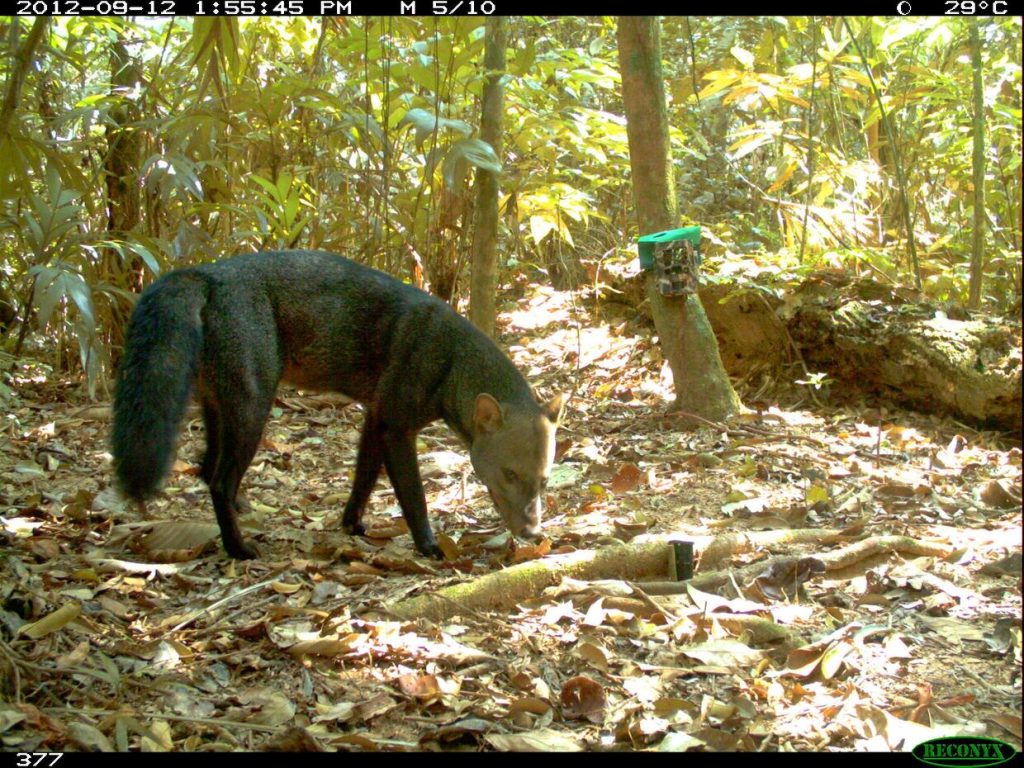
- The “Ghost” Revealed: After decades of being considered almost a rainforest legend due to its ultra-elusive behavior, the short-eared dog has had the largest dataset in its history uncovered by high-tech camera traps.
- More Abundant Than Jaguars: To the scientists’ surprise, the study revealed that it may be numerically more common in certain areas than large apex predators like the jaguar, recording up to 15 individuals per 100 square kilometers.
- Unique Anatomy: The animal has partially webbed feet (similar to a duck’s) — a completely exclusive and bizarre anatomical feature for an Amazonian canid — in addition to being mostly active during the day, with its heaviest movement recorded between 6 a.m. and 12 p.m.
With partially webbed feet like a duck’s, the Amazonian canid reveals a unique and intriguing trait uncovered by scientists.
For decades, it was considered a legend of the tropical rainforest. Almost never seen by humans, surrounded by mystery, and known for eluding even the most experienced researchers, the so-called “Amazon ghost dog” has finally begun to reveal its secrets.
A new study published in the journal Neotropical Biology and Conservation has provided the most comprehensive information ever compiled about the short-eared dog (Atelocynus microtis), one of the least-known canids in the world.
Although it was first described by science in 1883, the animal remains one of the Amazon’s most enigmatic mammals. Its extremely elusive nature, combined with keen hearing, a highly developed sense of smell, and a preference for dense forests, has made direct observations in the wild exceedingly rare.
Why Is It Called the Amazon Ghost Dog?
The nickname did not emerge by accident.
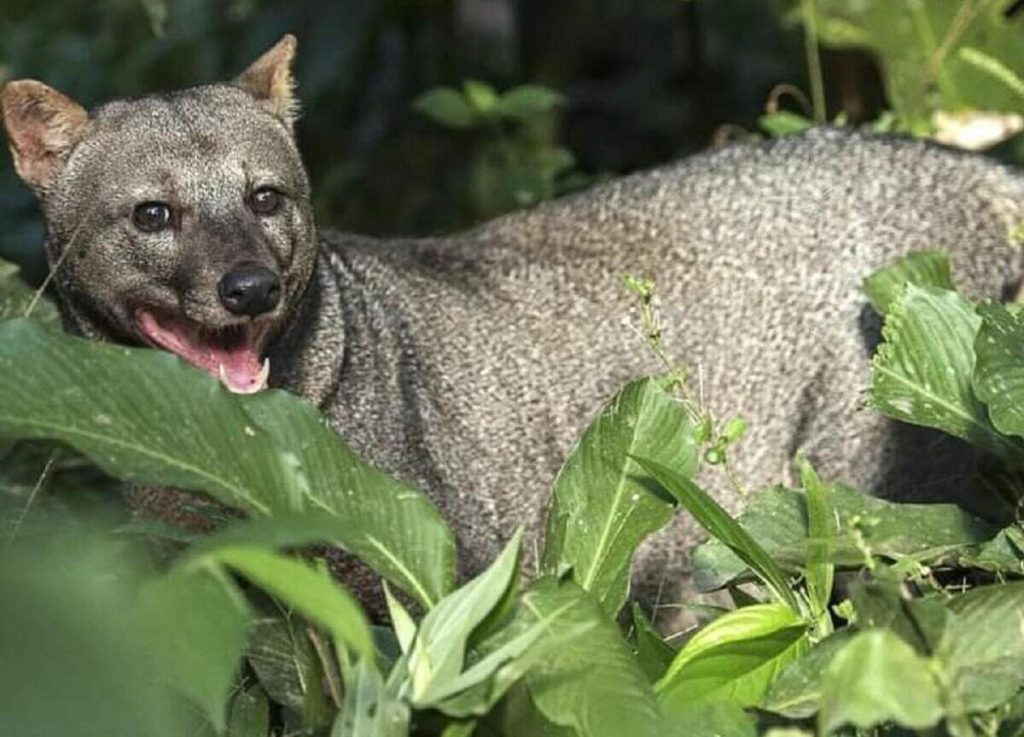
Known as the “Amazon ghost dog,” the animal earned this name because of the extreme difficulty of spotting it in its natural habitat. Even researchers who have spent decades studying the Amazon rainforest have rarely had the opportunity to encounter one.
Because of this rarity, scientists have described the short-eared dog as one of the least-known medium- and large-sized Neotropical mammals on the planet.
Technology Helped Unravel the Mystery
According to researcher Robert Wallace, the study’s lead author, the major breakthrough came through the use of remote sensing technologies and camera traps.
The first images of the species in its natural environment were recorded in 2001. From that point on, scientists gained a unique opportunity to better study one of the Amazon’s most poorly understood mammals.
Over nearly 25 years, researchers compiled approximately 500 distribution records in Bolivia and conducted 34 intensive camera-trap surveys across the lowlands of Bolivia and Peru.
The result was 594 independent photographic records, the largest dataset ever collected on the species throughout its known range.
What Does the Amazon Ghost Dog Look Like?
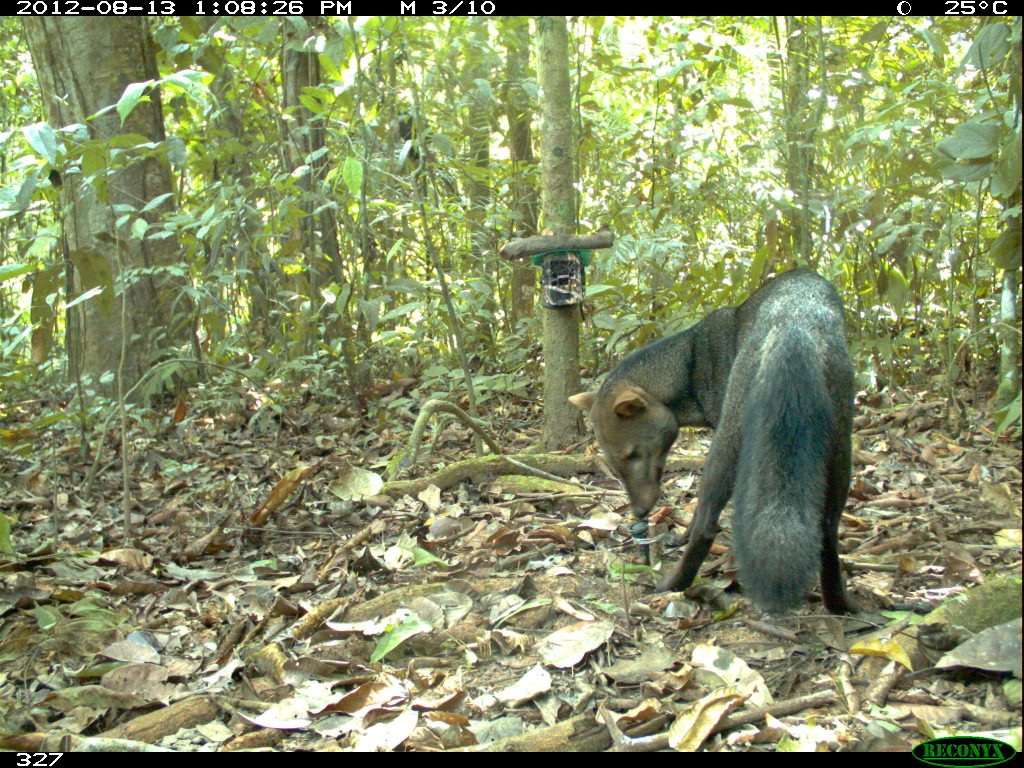
The images revealed an animal that differs considerably from more familiar canids.
The short-eared dog has a dark, dense coat that ranges from dark gray to reddish-brown. Its head is relatively large, while its ears are small and rounded. The body features short legs and a long, bushy tail.
One of its most fascinating characteristics is the presence of partially webbed feet (with interdigital membranes), a rare adaptation that is unique among Amazonian canids. Similar to a duck’s feet on a smaller scale, this feature enhances its swimming ability and helps it move through waterlogged soils, flooded forests, and seasonally inundated areas of the Amazon.
Adults measure between 72 centimeters and 1 meter (28 to 39 inches) in length and typically weigh between 9 and 10 kilograms (20 to 22 pounds), making them roughly comparable in size to a medium-sized domestic dog.

The Discovery That Surprised Scientists
The animal’s appearance was not the study’s biggest surprise.
The findings suggest that the ghost dog may be significantly more abundant than researchers previously believed.
Although it remains a difficult species to detect, scientists estimated a density of approximately 15 individuals per 100 square kilometers (39 square miles) in some of the areas studied.
This means it may be more abundant than large predators such as jaguars, although it is still less common than medium-sized carnivores such as ocelots.
In addition, the study revealed that the short-eared dog is predominantly diurnal, with much of its activity concentrated between 6 a.m. and noon.
Where Does It Live and What Does It Eat?
The species inhabits Amazonian forests across several South American countries, with Bolivia and Peru standing out as the locations where the most extensive surveys have been conducted.
A Future That Depends on Amazon Conservation
Although the research suggests that the species is more common than previously thought, scientists warn that its survival remains directly tied to forest conservation.
The study found that short-eared dog populations are significantly more abundant in protected areas and Indigenous territories where forest cover remains preserved.
The species is currently classified as Near Threatened. The primary concern continues to be ongoing deforestation and habitat loss across different regions of the Amazon.
The life expectancy of the short-eared dog in the wild remains unknown. In captivity, however, some individuals have lived between 9 and nearly 12 years.
Now that researchers have finally begun to unravel the mysteries surrounding this elusive Amazonian predator, one conclusion has become clear: the future of the legendary Amazon ghost dog will depend directly on humanity’s ability to protect the forests it calls home.